Jesus is For You – A Book Review

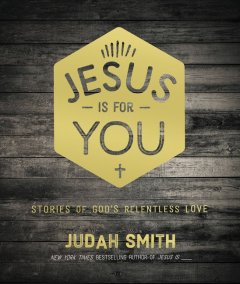
jesus is for you cover

Jesus Is For You by Judah Smith is a small little gift book filled with beautiful pictures, stories and verses that all communicate the truth that Jesus is entirely and completely on your side and in your corner.  I love Judah Smith.  I love his passion to help all people realize how deeply God loves them.  This book does just that.  This would be a great book to give to a new Christian – perhaps a Baptism gift or something that could be given out in a new Christian’s class.  It is both beautiful and encouraging.  It’s also a very easy and quick read.  The majority of the book is filled with quotes, verses and beautiful pictures.  It could very easily be used as a daily devotional book or to provide verses that one could memorize.  This little book is broken up into three sections (Jesus is…, Jesus Gives…, & Jesus is there when…).  Each section has stories from various individuals about grace, transformation, Christ encounters and salvation.

Regardless of your story, you can find encouragement in this little book by Judah Smith.  You might even gain a better understanding of who Jesus really is and what that means for you.  This book is light in words, but rich in love and inspiration.  Click the picture below to order your copy.

Disclaimer: I received a copy of this book free in exchange for my honest review.  I was not required to write a positive review – all opinions are my own.


Imagine Heaven – A Book Review

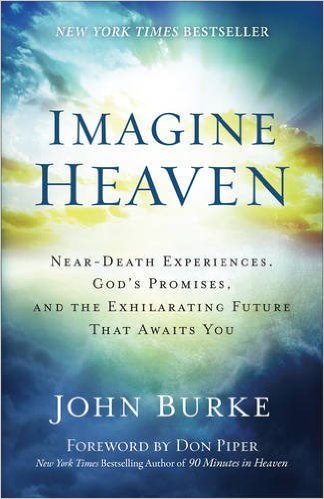
imagine heaven

I am not sure I have the words to convey how much I loved this book.  I needed this book.  Every so often I find a book that I cannot wait to recommend to someone that I feel would be touched or encouraged by its contents.  This book, however, is one that I feel should be read by everyone who has any interest at all in Heaven.  In fact, this book is about SO much more than Heaven.

In Imagine Heaven, John Burke shares stories from many people who have had near-death experiences and ties together the details and commonalities in each of the stories.  Each of these stories are set beside the many verses throughout scripture that talk about Heaven and also the author’s own thoughts about what we could possibly expect to experience there.  Although these stories are quite compelling, I believe the most valuable part of this book is the beautiful thoughts by the author about life, love and relationships in the here and now.  I was so very moved by his words and will be reading them over and over for years to come.  As a Worship Leader, Imagine Heaven has given deeper meaning to the lyrics in my favorite worship songs and I find this book to be a wonderful resource in helping God’s people to seek after the heart of God in worship.

I hope that you’ll buy and read this book.  It truly is about SO much more than imagining Heaven.  I believe it’s also about understanding God’s love for us, for each other and His purposes for His people right here on earth!

“God made you for himself – not to prove your glory, but to be his glory.   His pride and joy.  His beloved son or daughter.  What he wants you to do is learn to be secure in his love, in who he made you to be, and from that place of security, you can do what he created you to do.  And first and foremost, this is to love those you uniquely can love.” (pg 72, Imagine Heaven)

 Click this image to view the book on Amazon


Disclaimer: I received a copy of this book from the publisher in exchange for my honest review.  I was not required to write a positive review.  All opinions expressed are my own.

The Carols of Christmas – A Book Review

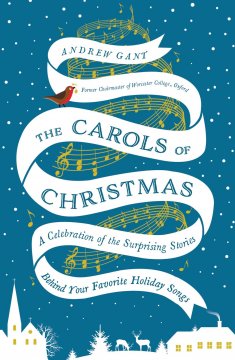
carols of christmas

I have several books about the history of the carols of Christmas, so I was extremely excited to receive this book by Andrew Gant on the subject.  The Carols of Christmas is a VERY detailed look at the history of our favorite carols.  While I definitely learned many interesting facts that I’ve never heard before, it did feel as though I was reading a textbook for a music history class.  The author seems to have a very thorough knowledge of the subject matter and obviously spent an enormous amount of time and effort to research and prepare this work, but it would have been much easier to read if he had left out the enormous amount of music theory and instead concentrated on the fun details that everyone would find interesting (such as the connection he made between the song, O Come O Come Emmanuel and J.R.R Tolkien’s The Lord of the Rings).

The author, who is a university professor and church musician, obviously has a passion for the history of music.  He writes in a style that is very intellectual and seems to be aiming at giving information rather than entertaining.  If your goal is an easy and inspiring Christmas read, this may not be the book for you.  However, anyone with a similar passion for all things music history and attention to detail could gain a wealth of new information from this book.

Disclaimer: I received a free copy of this book from BookLook Bloggers in exchange for my honest review


Why Homeschooling is the Hardest Thing I’ve Ever Done

FullSizeRender

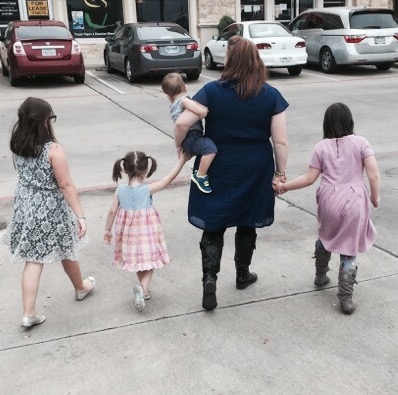
My Middles and Littles and me.

I would never have imagined myself a homeschooler.  Heck, I never really imagined myself a mom.  But here I am a homeschooling mom of 5.  I wouldn’t change it for anything, but I really have to admit that homeschooling is the hardest thing I’ve ever done.  Here are 5 reasons why:

BRAIN POWER. The sheer amount of things that I have to put in my brain in a week is really insane. And then to have to keep them in my brain for any length of time is a monumental feat. Schedules. Lunch menus. Units. Reading strategies. Presidents. Capitals. Grammar. Algebra. Life cycles. Periodic table. Memory verses. Learning styles. Busy boxes. Grocery lists. Passwords to all the websites. Philosophy. Government. Nap time. Holidays. Library books. It’s really just way too much all the time.  Thank the heavens for coffee, emergen-c and occasional sleep.

LIBRARY BOOKS. My weekly book routine looks something like this: Researching and finding books for each subject and each grade level and each topic for each week, unit and year. Reading all the reviews to make sure I’m choosing the right ones. Compiling all of these books into lists for each week. Requesting them from the library at least a week before we’ll need them. Picking them up from the library before we actually are supposed to be reading them. Keeping them free from spilled milk, kool aid, soda or juice. Keeping them free from permanent marker, accidental hi-lighting, stickers, stamps or boogars. Then, when we’re finished with them: locating all of the SAME books from under covers, under beds, in the bathroom, backyard or stuffed down in a laundry hamper. Finding time in my ridiculous schedule to actually return them to the library. Raiding my kids’ imaginary college funds to pay the fines. Lather, rinse, repeat.

3 MEALS A DAY AND SNACKS IN BETWEEN. I hate to cook. Always have. But these darn kids have to eat – every. single. day. It seems as though they’re literally hungry all the time. Do you feel stressed about wondering what to make for dinner every single night? How about what to make for breakfast and lunch and dinner every single day?! Chick-fil-A is my best friend. It’s also probably the reason my kids will have to go to community college and live at home. Don’t you even judge. Three meals a day and snacks in between for me and five picky kids is enough to make anyone want to live at Chick-fil-A. That and their yummy tea.

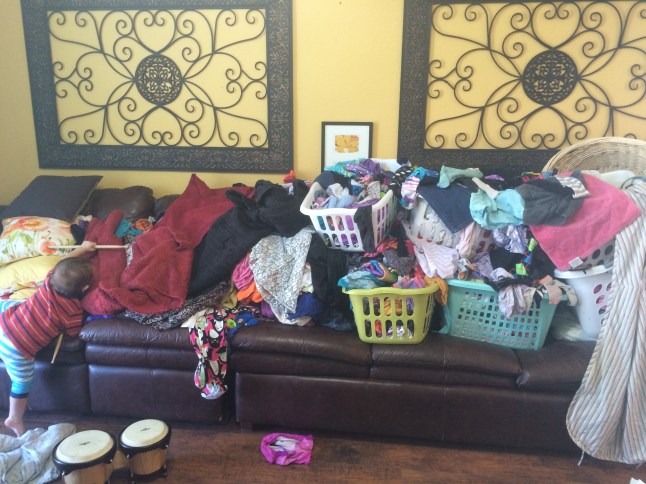
LAUNDRY AND STICKY FLOORS. To be fair, this is probably also true for anyone with bunches of kids whether or not they homeschool, but I feel as though it might be worse because my kids are home all day every day. The heaps of laundry in my laundry room are big enough that a grown man could hide behind them. Doesn’t have to be a small man either. A big hairy mammoth man could hide behind my piles of unwashed laundry. Sometimes I just want to throw out all the clothes and start over. Not kidding. I forget about the laundry in my washer so often that I actually have to buy new towels regularly because I can’t get rid of the smell on the old ones. And sticky floors. Oh my. I haven’t gone barefoot in my house since before my second child was born. There are at least three or four spills every single day. If I’m lucky it’s just water – but I’m not usually lucky. Good thing we have so many dirty towels all over the house to wipe up the spills though. We clean off our table no less than five times a day. We use it for eating, crafting, reading, eating, schoolwork, snacking, sewing, coloring, eating, painting, baking and the occasional fort. Sticky has just become my decorating style. Everyone has a decorating style. Sticky and smelly is mine.

IMG_1084

I MISS GROWN UPS. One of the biggest reasons that we started homeschooling is because I love being with my kids. They’re really cool kids. They’re fun and silly and sweet and kind and a whole lot of fun to be around. But I miss grown-ups. Grown-ups can cut up their own food.  Grown-ups don’t need a buddy to go to the bathroom.  Heck, grown-ups don’t usually need to be reminded that they should GO to the bathroom.  Grown-ups don’t climb in my clothes  or sneeze in my face.  They can make their own sandwiches and wipe their own noses.  Grown-ups won’t yell at me when I refuse to let them watch another hour of their horribly annoying TV show.  Grown-ups wouldn’t leave dirty underwear all over my house.  They don’t throw toys and they don’t throw fits.  I love my sticky, smelly children, but sometimes I really, really miss grown-ups.


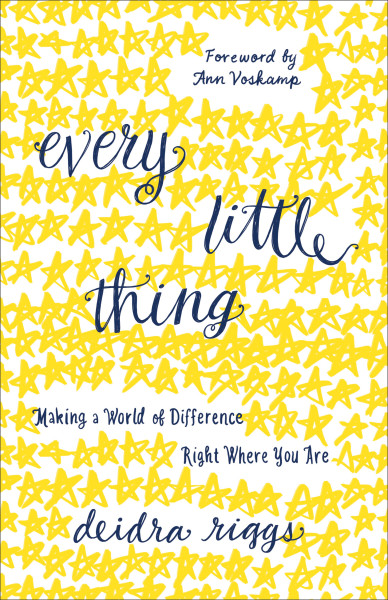
Every Little Thing – a Book Review

Every-Little-Thing-by-Deidra-Riggs

Sitting down with this book by Deidra Riggs is like sitting down with an old friend.  It’s like sitting down with Deidra herself.  I cannot tell you how warm and inviting her words were in this little book.  I felt a connection to Deidra and her sweet and sassy style of writing from the very beginning of Part One: Knowing Yourself.  It felt as though I was sitting down with a wise friend who was sharing her own story and who was equally invested in my own.  It felt almost like a pep talk.  She said things like, “God loves you and me, just the way we are – prone to wander and all the rest.” (pg 40) and “You’ve forgotten that fear doesn’t disqualify you from the thing God is calling you to” (pg 58).

I loved the author’s analogies and stories about her journey, and felt so very encouraged and inspired by her own personal lessons learned.  I especially loved the chapter titled “Breathlessness” where she talks about Abram and Sarai.  She talks about the faithfulness of God and our own trust and surrender to His purposes.  She says, “God is God, and he is faithful regarding the promises he speaks over us and into us” (pg 108).  She also says, “When we search for significance outside of surrender to God, we create our own version of God’s plan for us, and it rarely measures up” (pg 110).

In the final section of the book, Taking the Next Step, there are so many “quotables” that I nearly highlighted an entire chapter!  She talks about the Gospel needing to be lived and how the Gospel doesn’t actually need defending but rather needs to be lived.  “The gospel of Jesus does not need us to make it right or true, or worthy of our attention or devotion.  It does not ask us to draw lines of division or to build walls of separation.  It doesn’t need a new wardrobe or a new method of delivery.  It doesn’t need to be timed or altered or picked at any more.  The gospel needs to be lived” (pg 139).

While I LOVEDthis book, I loved its author even more.  I loved her wit and wisdom and her love for the Gospel and for her reader was so very evident and encouraging.  I am excited to recommend this book for anyone who just needs a good friend and encourager and I eagerly await another book by Deidra Riggs!


Disclaimer: I received a copy of this book from the publisher in exchange for my honest review.  I was not required to write a positive review.  All opinions expressed are my own.

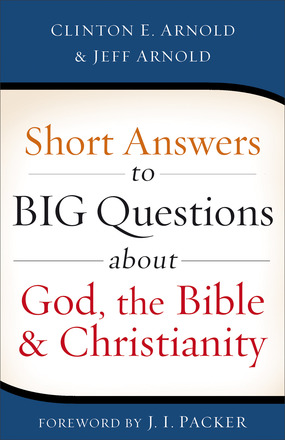
Short Answers to BIG Questions about God, the Bible & Christianity – A Book Review

short answers

I was really excited about this book as a resource for helping to answer questions that I get asked on a regular basis.  The authors, Clinton and Jeff Arnold, attempt to answer 50 of the most asked questions about God, Christianity and the Bible.  The book is divided into 9 sections, each with 3-8 questions relating to the topics of the Bible, life after death, the supernatural, God, Jesus, the Holy Spirit and several other topics.  Each of the questions is answered in only a few pages and includes key scripture passages and discussion questions.

I believe this book was intended to help new Christians or those curious about Christianity to find brief answers and scripture resources for general questions about Christianity.  For this purpose, it’s not a bad resource.  I do believe that the authors probably bit off more than they could chew in that many of these questions couldn’t possibly be answered properly in only a few paragraphs.  For example, the second question in the book is “Are there errors in the Bible?”.  The authors attempt to answer this by giving only a few examples of seeming contradictions and refuting them by saying that they are simply not contradictions.  There is very little explanation.  There is actually more intro and opinion than actual answers in most of the chapters.  While I do agree with the authors, I wish they had chosen to answer fewer questions with more in-depth answers.

I do, however, love the discussion questions and key passages attached to each question and believe this to be the most valuable part of this resource.  I also love that they addressed questions that the church doesn’t often talk about, such as “Why are there hypocrites in the church?” or “Does God hate sex?” or even “Why does God feel distant?”  There are several very good discussions that could be started by the questions in this book.

While I’m not sure this book actually answers all of the questions it poses, it might be a great resource to at least begin the discussion.

NIV Bible for teen girls – A Review

First of all, this is a beautiful Bible.  The cover is a lovely turquoise with pink and orange chevron at the bottom and around the spine and back.  The inside is beautiful too.  There’s quite a bit of pink, but even those girls who are not so girly would love the print, the chevron and the adorable doodles throughout.

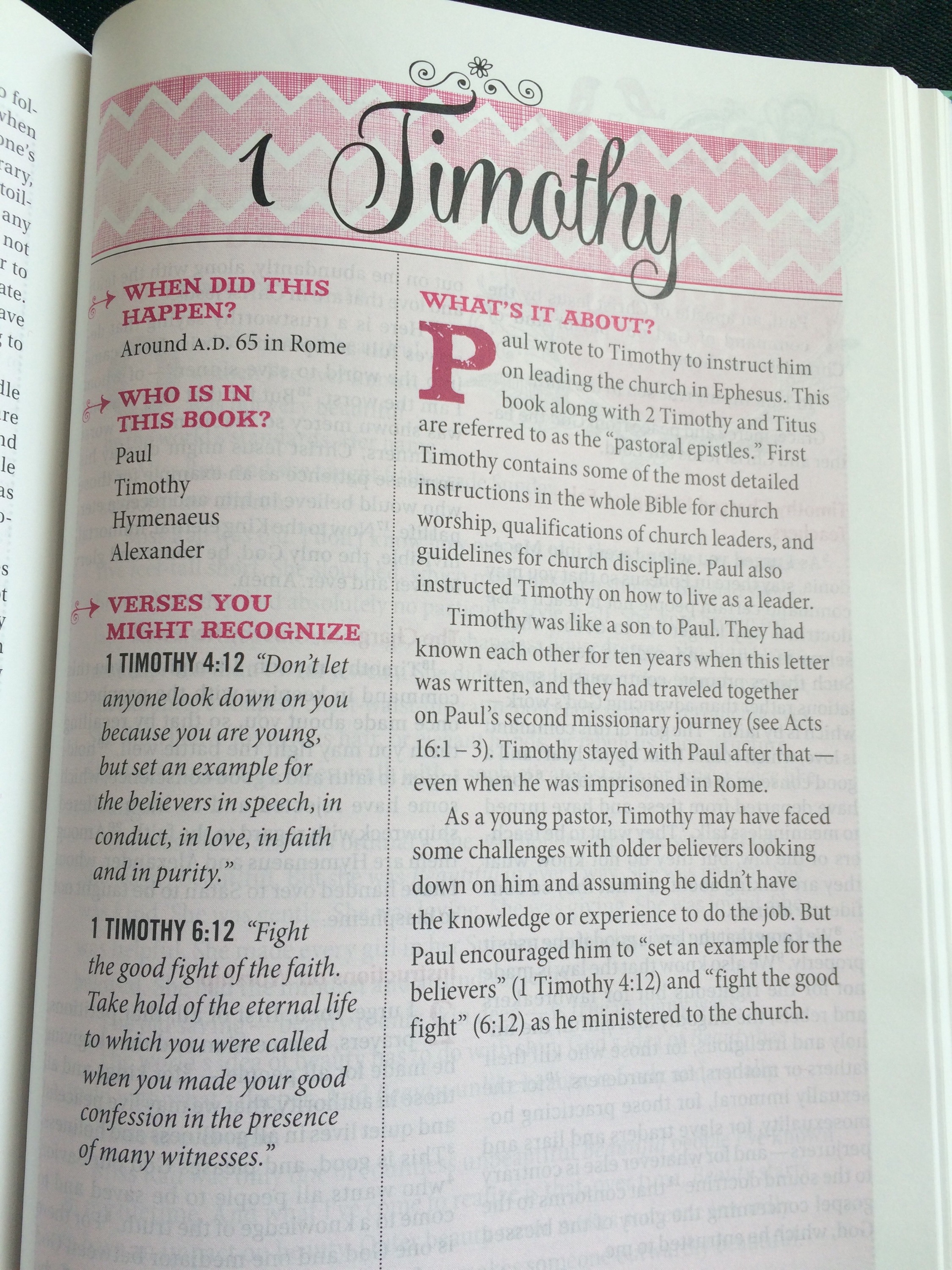
There are several features of this Bible that make it truly a wonderful option for not only teens, but also college age and beyond.  As a 34 year old mom of 5, I found myself thinking that some of the features would really be of benefit to me.  At the beginning of each book of the Bible, there is a “What’s it About” page.  I love how concise it is (making my daughters more likely to actually read it) and I LOVE that it contains a “Verses you might recognize” section!  What a great idea that was!  There’s also a really thorough concordance and an index section at the back.  I was immediately impressed at the attention to detail in this Bible – even the font is pretty.
 

Throughout the Bible there are many one page devotionals written by some amazing women (Annie Downs, Christine Caine and Bethany Hamilton just to name a few).  I read through several of them and found them to be really appropriate for teens especially.  I was also really grateful that they weren’t shallow and surface level devotionals – these are the real deal.  They’re written so that teens and young women of all ages will find them to be encouraging and helpful.  There are also “Women of the Bible” features, which I absolutely love.  The writers even included the meaning of the woman’s name, like Anna (from Luke 2:36-38) whose name means “gracious” or Esther whose name means “star”.  Perhaps my very favorite thing, however, is that the authors chose to highlight (in pink of course) certain verses throughout the Old and New Testaments calling them promises of God or verses worth remembering.  These verses are a great start to helping your teen find verses to memorize.


I asked my fifteen year old daughter to look through the Bible and give me some feedback.  She said, “This is the kind of Bible that a girl would use until it falls apart.”  I think that means she likes it.

I was so very pleased with this Bible, not just because it’s pretty (although that helps), but for the extra content it provides to help a younger woman to learn how to study and meditate on God’s Word.  This is a Bible and a devotional all in one and would be a wonderful gift to any young (or not so young) girl.

You can find the hardcover on Amazon here:


Or you can find this beautiful leather bound version of the Bible on Amazon here:

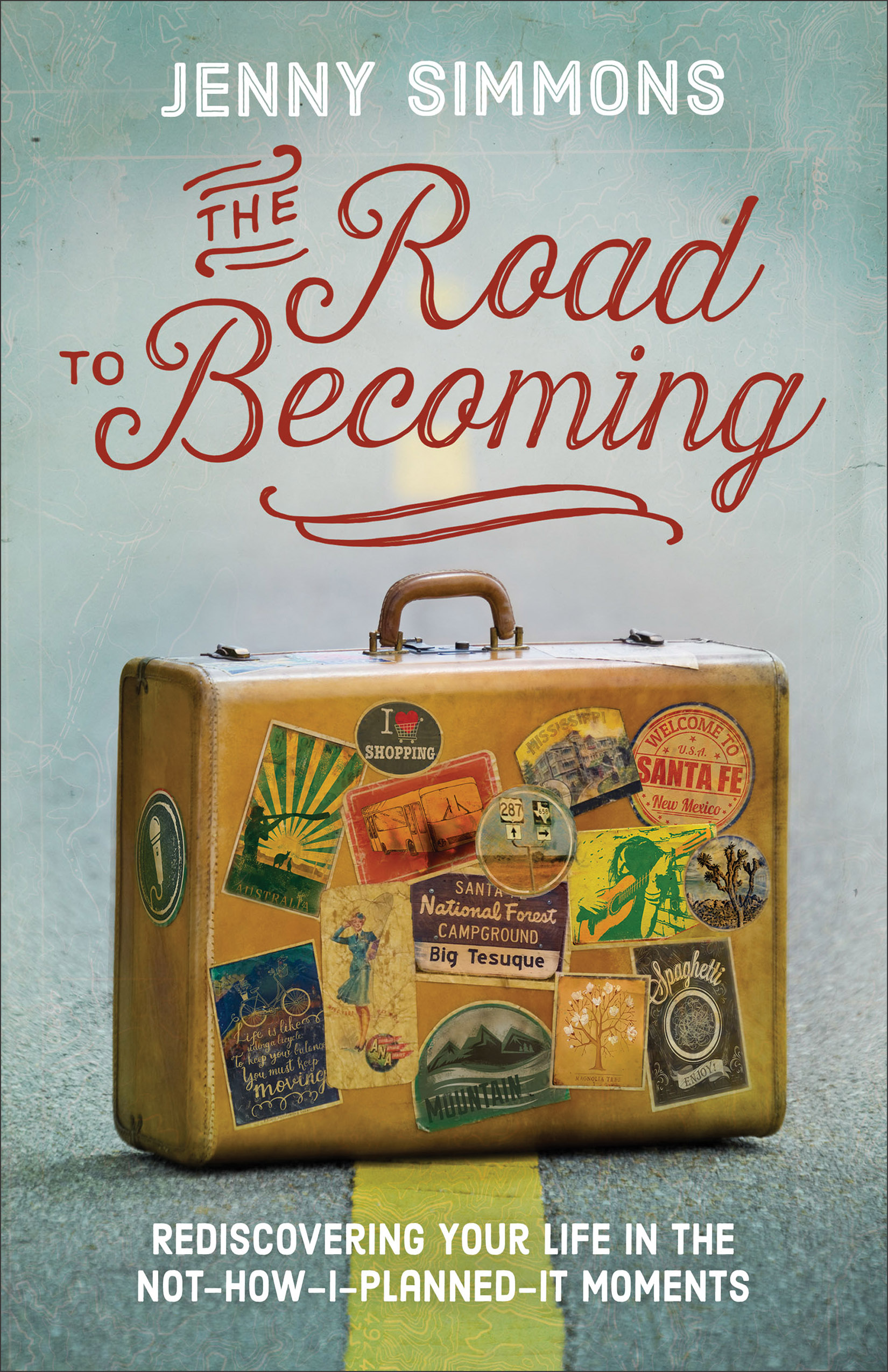
A Book Review – The Road to Becoming

road to becoming

Every so often an author comes along that speaks your language.  You know, that book that, as you read it, you find yourself wanting to speak it out loud to an audience so that you can say, “See!  Here it is!  This is exactly how I feel!  This is exactly right!”  This was that book for me.  I have read several really great books this year and could (and probably will) write about how each one encouraged, inspired or moved me.  However, Jenny Simmons’ book, The Road to Becoming, is a book that I’ll remember for a very long time.  Jenny Simmons is the front woman for former band, Addison Road.  I have always been a fan of their music (especially the song, Hope Now) and you know I love a good female-led band, but I have to say that what Jenny pours out in this book, for me, is her very best and most important work so far.

The book is a memoir of sorts, taking the reader through the author’s own journey to becoming.  From her earliest memories and dreams, through the heartbreaking end of her band, through a period of waiting and eventually to a beautiful rediscovery of her purpose and calling.  It’s so obvious that Jenny (that’s right, we’re best friends now) is a songwriter and lover of lyrics as her writing feels very poetic and artistic throughout the book.  Every word seems carefully chosen and thoughtfully written in a way that only an artist could do.

I felt an instant kinship with Jenny from the very beginning of the book, especially when she describes her connection with music.  She writes, “Sometimes people ask me when I first started singing, or how I knew I wanted to be a musician, as if you can name when you started existing.” (Ch 2, pg 25)

Do you remember that scene in The NeverEnding Story, near the end, where Bastian is reading the story and suddenly realizes that the narrator is talking directly to him?  And then he freaks out and throws the book down until he can gather enough wherewithal to pick it back up again?  This is exactly how I felt reading that chapter.  Jenny Simmons was talking directly to me!  Felt a little spooky if I’m being entirely honest.  As she is describing her own dream, it felt as though she was describing mine as well.

“Dreams rarely just appear out of thin air.  They are built over our lifetimes, taking root inside of us when we first begin to walk, talk, tinker, and explore.  They grow, stretch, develop, change shapes and sizes, and bubble underneath us – springs of living water yet to be fully unearthed.  We are the guardians of our dreams.  Those long-festering voices that continue to ring out from deep within us and are woven into the fabric of our stories; we care for them as only we can.” (Ch 2, pg 29)

As Jenny begins to describe the death of her precious dream, I felt another NeverEnding Story moment.  She says, “The hardest part of suffering is that the rest of the world keeps going like nothing has happened.”  Then, “..my weary soul wanted the whole world to just stop.  Everything in my soul wanted to beg the world around me for what it could not possibly give.  Just give me a minute to grieve – to wrap my mind around this – please just stop with me.  But the world can’t stop for every heartbreak.  If it did, it would never start again.” (Ch 8, pg 57-58, emphasis mine)

I wish I could describe how I felt reading those words.  I think mostly I just felt that I was not alone.  For the very first time it felt that someone had put words to my own thoughts and feelings about grief.  This is so very true and right!

In another section of the book, she talks about seasons of lostness.  Here is one part that I found to be so very beautiful.

“Following Him in the dark places is scary, but not paralyzing.  He knows when we should make a trail and where to pitch the tent.  Where the next stream of life-giving water is and what the village on the other side of the mountain looks like.  He sees what I cannot and illuminates the path.  Not running ahead of me, not forcing me, but side by side, as trusted friends, we walk in step.  And I realize I am walking on holy ground.  My lostness is made holy, my journey is made bearable, my unknowing state becomes fully known as God journeys deep into the dark places with me.  He is the treasure.” (Ch 15, pg 112)

I could talk for days about the truth in this book.  I always say that the mark of a good book is what I call “quotables”.  Take a glance through any book I’m reading to see how much hi-lighting or underlining I do and you’ll know if it’s a good book or not.  There are “quotables” in every chapter of this book and on nearly every page.  There is so much to take in that it often felt like I needed to slow down and make note cards just so I could really absorb all this book has to offer.  The themes of purpose, grief, resurrection, hope and grace fill the pages.  I was moved by the stories, encouraged by the lessons learned and inspired to take every bit of wisdom offered here and apply it to my own story.

“The end of the story is about something more rich and beautiful and constant than dreams, which are here today and gone tomorrow.  The end of the story is about living whatever the story is well.” (ch 30, pg 223)

Whatever season you find yourself in, this book will be an encouragement along your journey.  You will find comfort for a grieving heart, grace for a worn out mom, hope in your season of lostness or waiting, and a few funny stories along the way.  In the prelude of the book Jenny writes, “If nothing more, I share my story to remind you that you are not alone in yours.” (p12)  That is exactly what this book does.  What a treasure!

You can find The Road to Becoming on Amazon by clicking on the picture below:

Disclaimer: I received a copy of this book from the publisher in exchange for my honest review.  I was not required to write a positive review.  All opinions expressed are my own.

Teaching Kindness to Kids

IMG_7408

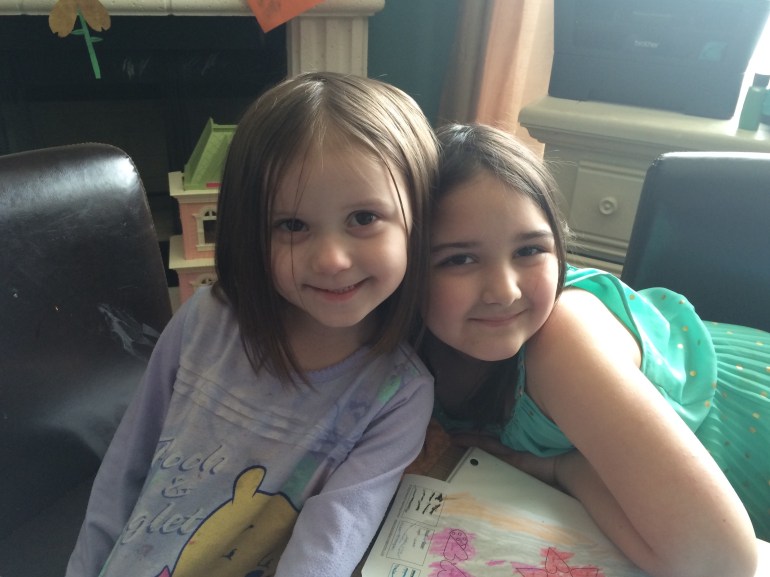
One of the most important qualities we can teach our children is kindness.  It’s the quality that I appreciate in others more than almost any other quality.  Kindness speaks to our hearts and soothes our souls.  A word of kindness at the right time can heal a wounded heart or encourage a broken spirit.  Kindness is not usually the natural way of people.  It’s certainly not always the easiest way to go.

Chuck Swindoll once said, “Life is 10% what happens to you, and 90% how you react to it.”  This is probably the most significant quote I have ever read and I teach it to others often.  I have found (in my enormously long life) that life is hard and that people are mean.  The only way to make it through it is to choose how to react to it.  Take back the control.  Treat other people differently than they treat us.  Choose to see other people through the eyes of compassion.

I want my kids to be kind kids who grow up to be kind adults.  But how do we accomplish this?  We have to be intentional about teaching our kids to be kind.  Here are some ways we can do that…

MODEL IT IN YOUR HOME.  In our home, we try to be very careful how we speak to each other.  We don’t use rude words.  We don’t yell.  We try to model kindness in our speech.  We use the words ‘please’, ‘thank you’ and ‘excuse me’ – even when asking our kids to do something – even if they’re making us crazy.  This may seem simple, but I promise it will rub off more than you can imagine.

We also fight fair.  We don’t yell or scream at each other (it’s kind of a rule in our house).  Sometimes we mess up, of course – but when we do, we apologize and forgive.  We want our kids to know how to talk to each other in a kind way.  Even when they disagree.  Even when they’re hurt.  We always say “you can be mad, but you can’t be mean.”  I think it’s such an important thing for all of us to remember in relationships – you can be mad, but you can’t be mean.

MODEL IT IN COMMUNITY.  We want our kids to see people as people.  Not as cars.  Not as objects that are in their way.  We want to see people as people – people with a family and a story.  We talk kindly to people we meet and encourage our kids to be kind too.  We open doors for people.  We drive kindly (this is a big one for me – you are not a kind person if you drive like a jerk!).  We also want them to think about other people’s feelings, so we talk about it a lot.

When my oldest was in elementary and middle school (back when they were in public school), she always made friends with the ones that were ignored by everyone else or the ones that were picked on for whatever reason.  Her heart is a kind heart.  She sees people as people.  She is never rude.  I learn so very much from her desire that all people are loved and accepted.  Truly.

ENCOURAGE IT BETWEEN SIBLINGS.  When my girls argue, it is almost always because someone is being selfish or thoughtless.  When they bring the dispute to me (which they almost always do – and in the most dramatic fashion) I always ask 2 questions: 1) Are you being kind?  2) Are you thinking of yourself or others?  They always answer honestly and they almost always immediately apologize to each other.  I’m sure this won’t always work out this way, but for now I am treasuring it.

A former pastor of mine taught us a phrase once that I have often used on my own kids.  Whenever his kids would say “I didn’t MEAN to!”  He would reply, “You didn’t mean NOT to.”  Relationships require intentionality.  Communication requires intentionality.  We have to be purposeful and careful with our words to each other.  Kindness is not always our natural, go-to reaction to other people – we must be intentional about kindness – especially in families!

CELEBRATE IT IN OTHERS.  Whenever we see someone being kind, we acknowledge it.  We want our kids to see how much we value kindness by celebrating it in other people.  I am privileged to work with some incredibly kind people.  Often I will come into my office and find a vase of flowers, a card, a gift, or a note of encouragement from either a co-worker or a ministry volunteer.  I cannot tell you how much these acts of kindness mean to me.  Every time it happens, I can’t wait to show my kids!  I want them to see how the kindness of others has blessed their mom.  I want them to see kindness as a gift so that they will want to give that gift away to others too!

REMEMBER THAT KINDNESS IS FOR EVERYONE.  I’m still learning this.  I think I will always be learning this.  There are always moments when I want to fight for my own rights rather than extend grace, compassion or kindness to others.  I want to be kind, until fear or prejudice or selfishness gets in the way.  I think everyone is able to be kind to people who are just like them – that’s easy.  But what about those who are different?  Or those we disagree with?  Or those who have hurt us?  That’s when the real work of kindness begins.  I think sometimes that our kids understand the “no-matter-whatness” of kindness better than we ever could.  Perhaps we could learn from them what it looks like to be the same kind of person to everyone we come across – regardless of our differences.  We need to pursue the kind of kindness that will help us to see people – all people – through the eyes of a loving Father.

If we want to teach kindness to our kiddos – we have to start by teaching kindness to ourselves.  Let’s model it in our homes.  Let’s model it in community.  Let’s encourage it among siblings.  Let’s celebrate it whenever we see it in others.  And most importantly, let’s remember that kindness is for EVERYONE!

“God is compassionate, loving kindness.  All we’re asked to do is to be in the world who God is.”

“Compassion is always, at its most authentic, about a shift from the cramped world of self-preoccupation into a more expansive place of fellowship, of true kinship.”

– Gregory Boyle, Tattoos on the Heart

Rules of Engagement in Communication

FullSizeRender-3

Every time I tell people that my husband and I don’t ever yell at each other they give me this look.  The look that says “Either you’re a big fat liar or some kind of crazy person.”  It’s something that has been important to us our whole marriage.  We hate being yelled at, so we don’t yell.  Every once in a while one will slip through – like when the 3 year old pees on the floor for the umpteenth time that day at the exact same time that the 1 year old dropped the third thing in the toilet (which hadn’t been flushed, by the way).  Yep, that happened.  I may have yelled a bit at that moment.  But as a general rule, we don’t yell or scream in this house (except Finny – the three year old – who screams pretty much all the time.  Scared, excited, angry and happy emotions all produce a very high-pitched screaminess in that child).  But aannnnyyywaaaayyyy….

One of the ways that we keep our cool (thus preventing the yelling) in communication is to establish some rules for engagement.  Most of these are more specific to our marriage relationship, but are also helpful in a parent/older child relationship too.  Here are some of the rules we use in our household:

SEEK TO UNDERSTAND.  ASK CLARIFYING QUESTIONS.  One of the main reasons we fight is because we feel that we are not being heard or understood.  We want to make sure that our feelings are being heard, but we often don’t make it our priority to truly understand the way the other person is feeling.  We don’t ever assume that we understand what the other is saying.  Actually, sometimes we do and it always, always gets us in trouble.  Because we have different brains and because we speak different languages, we almost always hear something that the other one didn’t say in the midst of an argument.  So, we simply ask questions.  “I want to make sure I understand…are you saying that…”  “I’m hearing that you feel…..is that correct?”  Honestly, it may feel silly to begin with but it is the number one thing that has improved our communication.  It makes us both feel heard and understood.  At the very least it tells the other person that we WANT to understand, which makes such a huge difference in the tone of the argument.

LISTEN…DON’T JUST WAIT TO SPEAK.  So many times when you’re in an argument, you’re only goal is to make sure to prove your point.  You want to be heard, understood, proven right.  So, you spend the entire conversation waiting for the other person to be quiet and listen to what you have to say.  Instead of listening to their side or thoughts or feelings, you’re simply formulating your argument in your head waiting for an opportunity to jump in and prove how amazingly right you were all along and how dumb they were for doubting you.  When we listen more than we speak…

TAKE TIME TO PROCESS BEFORE YOU REACT.  This is enormous for us.  My husband is naturally very good at this.  Me, not so much.  I tend to react quickly and often with more snark than I should.  He tends to take more time than I’m comfortable with.  We’ve learned to come up with some sort of balance.  He is not allowed to leave the room and I am not allowed to respond right away.  Remember that little poster in your elementary school classroom with the word THINK on it?  Before you speak, you’re supposed to T.H.I.N.K.  Is it True?  Is it Helpful?  Is it Inspiring?  Is it Necessary?  Is it Kind?  I honestly go through that in my head WAY more often than I should probably admit.  I need to.  I want to make sure to build others up with my words – especially my husband!  Taking time to process before I react is the most important step in doing that.

AVOID “HOT BUTTONS” OR SENSITIVE SUBJECTS.  We don’t ever bring up past relationships.  We just don’t.  There’s no need to and it may make us more sensitive or vulnerable than we really need to be in conversation.  We don’t bring up the same sad subjects over and over.  There are some things that we have to simply agree to disagree.  Not the big stuff – never the big stuff.  For the big things, we have to always be on the same page.  But the little things that don’t matter at all?  We just let them lie.

LEAVE THE PAST IN THE PAST.  We don’t bring up past mistakes, feelings, hurts or arguments.  If we have already resolved something, it is declared over and finished.  There is nothing good that has ever come out of digging up dead stuff.  What’s the point of resolving things or forgiving things if you are just going to bring them up over and over again.  There’s no security in that.  No one would feel safe to share their feelings in a relationship where there is never a clean slate.  This one is a hard one for us.  Sometimes we mess up and dig up old junk in order to win an argument or make a point.

WATCH YOUR TONE.  We don’t yell.  I know I mentioned that before, but I think it’s worth mentioning again.  Yelling at someone communicates that you are in control or in charge (whether that is your intention or not).  Think about when someone yells in public – what is your reaction?  Mine is that they are trying to assert themselves as the one in control or the one who calls the shots.  Seeing a parent yell at a child in public makes me cringe.  Seeing a husband yell at his wife in public feels even more uncomfortable to me (probably because parents yell at their kids all the time in public!).  If you wouldn’t do it in public, why in the world would you do it in private?  Or worse yet – in front of your kids?!  I know that in most families yelling is so commonplace that it feels normal.  I would argue that it is NOT normal.  And not ok.  Speak kindly…gently.  With compassion and with love.  I cannot imagine a better way to communicate worth and love to someone than to refuse to ever raise your voice at them.  This is how my husband communicates that I am valued and respected by him.  It’s how I communicate the same to him.  This is so important to us.  In case you’re wondering, we also don’t allow our kids to raise their voices at each other or to us.  We want them to always think of others as more important than themselves.  This is one way that we teach that concept to them – and to ourselves.

A former pastor of ours once taught us this phrase and it has stuck with us all these years:

“Do you want to be right or do you want to restore the relationship?”

Every time we argue or disagree, we try to filter our words through that phrase.  Am I trying to prove something?  Am I more worried about being understood or being understanding?  Am I more concerned with my own feelings than the feelings of the other person?  Is my goal reconciliation?  Or am I more concerned with being right – or proving that I’m right?

I know that these “rules” may not work for everyone.  They work for us.  I would encourage every married couple or parent or family unit to come up with their own rules of engagement for communication.  Let’s learn how to communicate with and understand each other.  Let’s teach it to our kids.  Let’s make the world a better place to be one relationship at a time.