Mommy Needs A Raise – A Book Review

I’m not sure exactly what I expected with this book.  As a mom of five I’ve read MANY parenting books.  This is not one of them.  It reads like a memoir.  The first few chapters made me want to give up.  I’m not sure what they have to do with the rest of the book other than to show the enormous difference between the author’s early adult life and her life after kids.  I wish she had shortened the first five chapters to about five paragraphs or omitted them entirely.  As a mom of five, who became a mom pretty much as soon as I became an adult, I couldn’t relate to corporate stories at all and was entirely bored.

It got a bit better after that, though.  I tend to devour memoirs in one or two sittings because they’re so easy to read and this book was no different.  The author found her stride by chapter eight and I began to feel much more connected to her story after that.  Sarah Marshall Perry is a very skilled writer, making her book easy to read and her story engaging and relatable.  While there are very few quotables in this book, it is an easy and enjoyable read.  I appreciated the author’s wit and humor throughout, and even found myself laughing out loud a few times.

Overall, this is a fun and easy read.  There is very little to be learned from this book, but there is much to appreciate and enjoy.  If you like memoirs, appreciate good writing and enjoy strong, funny women – this is a wonderful book for you.


Disclosure: I received a copy of this book through Baker Books Bloggers.  I was not required to write a positive review.  All opinions are my own.

BakerBooksBloggersSquareLogo

Life In Community – A Book Review

Dustin Willis’ Life in Community is a book that explores what true Biblical community should look like in the church.  The book is organized into three sections: forming community, values within community, and next steps for strong community.  The first section is perhaps the best one, as it covers the need for, barriers to and benefits of living in community with others.  I loved this quotable from chapter three: “Since there is only one God, there is only one people of God.”  I also loved this one from the same chapter: “The gospel is the driving force to our transformation, and community is the context where the greatest growth and revolution takes place.”

The second section (The Values for Living in Community) covers topics such as authenticity, confronting sin, grace and forgiveness, encouragement, and bringing your best to the table.  All of these chapters are good and helpful, although the tone changes quite a bit in the chapter about calling each other out on sin – which, due to the more stern and almost condescending tone, was my least favorite chapter of the book (It’s actually titled “Hate can be a good thing”). My two favorite chapters in this section were the “Glue to the Good” and “Love, Like and Honor” chapters (chapters 7-8).  I loved these quotables from chapter 7:

“Biblical encouragement uses your words to point out examples of God’s goodness in another person’s life”

“It’s amazing what can happen if you take your eyes off yourself and all that is broken in life and attempt to be a source of encouragement to others.  Not only does God use this to bring affirmation to someone else’s life, but it brings joy to yours as well.”

And this one from chapter 8:

“As we reset our minds to see one another through a lens of mercy, forgiveness will become a part of the community we are building.  The Scriptures are rich with the thread of the mercy that leads us to a place of deep forgiveness.”

The final section of the book is actually just one chapter with the theme of being captivated, motivated and driven by God’s grace.  The author lays out a very practical step-by-step process for implementing the ideas from the book.  He talks about belonging being the opposite of loneliness.  It’s a wonderful ending to the book.

At the end of each chapter, the author provides four or five “Getting Practical” questions that would be helpful in a small group setting or maybe even for personal reflection.

Now for my thoughts.  There were parts of this book that I loved (chapter 7 & 8 and the final chapter).  There were parts of this book that I didn’t love – or even really like.  The foreword by David Platt was, by far, my very favorite part of the book.  While there are ideas within the book that are good, there aren’t many that are new.  If you’ve not ever read a book on this topic before, this would be a great one to start with.  However, if you (like me) have read many, this book is really just a rehashing of the same things as before.  I will say, though, that the chapter about Gluing to the Good (chapter 7) was entirely new to me and a wonderful read.  Overall, I would recommend this book to anyone new to the topic or experience of biblical community.

Disclosure: I received a copy of this book from the publisher in exchange for an honest review.  I was not required to write a positive review.  All opinions are my own.

The More of Less – A Book Review

This book is quite a departure from what I normally read, but it was wonderfully worth it.  Joshua Becker’s The More of Less is inspiring, encouraging and remarkably practical.  It’s a super short book that I probably could have read in a day or two if it weren’t for all the ideas and suggestions that I wanted to put into practice one at a time.  The main idea of the book comes from Mr. Becker’s own story of moving from owning too much to a lifestyle of minimalism.  At the very beginning of the book, and the beginning of his own journey, he notes: “Our excessive possessions are not making us happy.  Even worse, they are taking us away from the things that do.  Once we let go of the things that don’t matter, we are free to pursue all the things that really do matter.”

This little book is laid out in such a way so that each chapter builds on the one before.  Starting at the beginning by answering questions such as “what is minimalism” and “what could minimalism look like in my own life”, Mr. Becker moves thoughtfully and carefully, at quite a slow speed, through each of the steps laid out.  He talks through some of the reasons we have too much stuff, such as the fog of consumerism (chapter 4) or the search for acceptance or security (chapter 5).  Chapter six helps the reader to declare their why.  I really appreciated this chapter and even wrote down my own reasons for wanting to pursue minimalism (hello – FIVE kids!).  The author gives practical advice about how to begin the process, including what to keep and what to give away.  There is so much grace and kindness in this chapter that it is obvious that the author has experience with the type of people that are attached to their stuff.

There is a chapter on maintenance, one on minimalizing for the family, and a couple of chapters on the difficulties you might come across as you begin your journey towards minimalism.  The book ends with two very quotable chapters on living intentionally (in every area of our lives) and not settling for anything less than purposeful living.  These were the best two chapters of the book.

Perhaps my favorite quotable in the book comes from the final chapter and summarizes very well the tone of the entire book:  “..life is about choices, but some choices are more valuable than others.  Some things matter more.  Some things matter less.  There is greater life available for those who recognize the difference.”

The More of Less by Joshua Becker will inspire you to take a look at the things in your life and your home that might be keeping you from the things that really matter.  It will encourage you to take a good, long look at your stuff and begin to make better decisions for your future.  Since reading this book, we have given away over 400 books, over ten bags of clothes and over 50 DVDs!  We’ve begun working through the rooms in our home one by one to make more room for us to actually live and play here and I hope and pray that this is just the beginning of our family’s minimalist journey.


Disclaimer: I received a copy of this book from the Blogging for Books blogger review program in exchange for an honest review.  I was not required to write a positive review.  All opinions expressed are my own.

They Say We Are Infidels – A Book Review

Mindy Belz’s book, They Say We Are Infidels, reads like fiction.  I had to keep reminding myself that the stories within were true – they actually happened.  This book is not for the faint of heart.  It’s long.  It’s detailed. And it’s heartbreaking.  Going into this book I knew nothing about the Middle East – nothing of the history, the culture, the people.  They Say We Are Infidels covers all of that and more.

Each chapter begins with a location, a year and a scripture verse.  Covering the years 2003-2015, Ms. Belz follows the lives of Christians from the Middle East as both a friend and reporter.  Her writing is so detailed that the reader is transported to the kitchen, living room, car or church alongside her friends and acquaintances as the stories of their lives unfold within the pages.  Stories of churches being bombed, of pastors being kidnapped, of families fleeing for their lives.  Stories of murder, genocide, terror, unspeakable hate and paralyzing fear.  But also stories of hope, perseverance and survival.

I have to admit that this book was hard to follow at times for someone like me who is not a fiction reader simply because this book reads like fiction.  It’s a book filled with stories.  The author also assumes that the reader has at least some knowledge of middle eastern history (although she does give quite a few helpful explanations of people and events).  It is also detail heavy, which is something that fiction lovers would appreciate but it made it more difficult for me since I read pretty much exclusively nonfiction.  Still, I find myself thinking about the stories and the information I collected throughout this book on a regular basis.  I’m honestly a bit haunted by them – which, I think, is probably a good thing.

I’m sure that the average person has no more knowledge or understanding of what has been going on across the globe than I do – and this book is a beautifully written, filled with personal stories and actual information about what is happening to real people who love Jesus in a place where loving Jesus is incredibly dangerous.  If you are at all interested in understanding the plight of middle eastern Christians, you will find They Say We Are Infidels to be a wonderful read.


Tyndale Blog Network

Disclaimer: I received a copy of this book from Tyndale House Publishers in exchange for an honest review.  I was not required to write a positive review.  All opinions expressed are my own.

The Sin of Certainty – A Book Review

I’ve been a part of evangelical Christianity all my life.  It’s all I’ve ever known.  My worldview was formed from within a Southern Baptist church and family and, although I’m grateful for my upbringing, I have always been completely unaware of how evangelicalism looked to the rest of the world.  Having learned about the history of evangelicalism from evangelicals, you can imagine that I have only ever heard one side of the story.

I’ve spent the last year or so re-learning evangelical history from the perspective of those who have been marginalized, criticized, ignored or injured by the church.  As a result of hearing/reading all of these stories, I have had to come back to my own theology, beliefs and understandings of the Bible over and over again to see if they still make sense in light of what I’ve learned.  Before beginning this re-learning process, I had all of these neat little boxes filled with the theology/beliefs I’d acquired throughout my life and ministry – each one already decided upon and sealed shut.  I feel as though, over the last year or so, I’ve been dumping out each of these boxes one by one to see if there’s anything I’m still certain of.  And although it’s been painful and confusing, it’s also been such a beautiful process for me.  Peter Enns’ book, The Sin of Certainty, helped me to understand why.

“If having faith means holding on to certainty, when certainty is under “attack,” your only option as a good Christian is to go to war – even if that means killing your own.” (pg 46)

I remember hearing as a child that we should “know that we know that we know” what we believe and why.  I believed it to be my duty as a good Christian to figure out where I stood on absolutely every issue (based on what the Bible says about it, of course) and make sure that I defended those beliefs at all costs.  I’ve heard the phrase “defending the Gospel” more times that I can count and I honestly have never understood why the Gospel needed defending since the word Gospel means “The Good News” (which I learned in my 3rd grade Sunday School class).  If it’s truly good news, why would it need to be defended?

Back to the book.  Using humor, sarcasm (my native language), and quite a bit of research, Peter Enns explains why certainty is not only not possible, but also not beneficial to a life of true faith.  He talks about the difference between belief in God and trust in God – a difference that, to me, is entirely life altering.  This book gives the reader permission to doubt, to be confused, to be uncertain about what we believe about God or the Bible.  For someone like me, who feels less certain about pretty much everything with each passing day, The Sin of Certainty was like a fresh stream of water or a cool breeze after the hottest day of the year.  There is hope within the pages of this book that I needed more than I can express.

The reason that this process of re-learning, of purging, of letting go of certainty has been so beautiful to me is exactly one of the things that Peter Enns wrote in his book: “that trust in God grows best when things are falling apart.” (pg 71)  It’s true.  When I became unsure about so many things, amazingly, my trust in God actually began to grow.  I couldn’t figure it out.  It didn’t make sense.  I thought that my faith rested on all of the things I was sure of – all of the beliefs I had so carefully stored in all of those boxes.  But it didn’t.  It rested on only one thing: that I believe God to be faithful and trustworthy.  I have been able to dump out all of my boxes and still believe that God is good and just and loving – not because of right theology or certainty but because of trust.  I wouldn’t have been able to put words to these thoughts without the help of Peter Enns’ timely words in The Sin of Certainty.  If you’ve ever struggled with doubt, if you’ve ever been confused by Scripture, if you’ve ever wondered why everyone around you seems so certain about everything while you are still struggling, you need to read this book.  It’s absolutely brilliant and beautiful.

“God exposes the limitations of our thinking.  Then we can see the inevitability to letting go of the need to know and trust God instead – as best as we can each moment – because God is God.  Trust like this is an affront to reason, the control our egos crave.  Which is precisely the point.  Trust does not work because we have captured God in our minds.  It works regardless of the fact that, at the end of the day, we finally learn that we can’t.” (pg 89)


Disclaimer: I received a copy of The Sin of Certainty from the publisher in exchange for an honest review.  I was not required to write a positive review.  All opinions expressed are my own.

3 Things Your Littles do that are Entirely Normal

I hear a lot from parents (usually other moms) about something their kid does that makes them completely crazy.  They often feel like their kid is the ONLY one who does whatever it is that’s making them nutty.  With five kids, I know the feeling and I know it well.  When my oldest was about eight years old she went through a phase of blaming me for everything – she yelled, she screamed, she told me I was the worst mother in the history of the world and that she hated me.  I cried buckets of tears over it.  I thought my kid was broken and that I was the only mom on the planet whose child hated them.  This phase went on for about a year.  I had no idea what to do about it.  I cried, I ignored, I yelled back – nothing seemed to work.  Then I ended up in a parenting class where other moms talked about this “phase” as if it was no big deal.  I couldn’t believe it!  I was not a failure as a mother.  I was not alone in this.  Other parents had suffered through the same thing!  I cried more buckets that day – not buckets of sad tears, but tears of relief.  Of peace.

Knowing that you’re not alone is a great first step in believing that you’ll make it through.  The assurance that you have people who understand your situation and have walked through it (and survived it) plants little seedlings of hope in your heart.  Hope that you will also survive it.  I hope that this list will plant little seedlings of hope in your heart.  Mommying is hard – but you are not alone.  There is a community of women all around us who have gone before and whose wisdom we can learn from.  It’s time for us all to step up and encourage each other – to band together in a confidence that declares that we can make it – to fight for our collective sanity – to make this mom journey just a little easier because we know that we all have allies.

This list may not be true for every single kid, and there are definitely other things not included in this list.  These are the things I hear most often from friends about their own little ones and these are the things I have the most experience with from my own kids.  I should also note that since my oldest child is only fifteen and my other four are all under ten, this list really only covers issues I’ve seen during the younger ages.  I hope it helps you feel less crazy – or that it assures you that your kids aren’t crazy – they’re just normal kids.

LYING.


Every single one of my kids (with the exception of the youngest – who is only 2) went through a lying phase.  For some it lasted longer than others, but they all went through it around the age of 3-4.  My oldest child went through it when she was about three and it lasted for well over a year.  My youngest child (who is about 4 1/2) is just now coming out of this phase, which for her lasted only about six months or so.  Every child is different.  But every child experiments with lying.  I read this in an article in Parenting magazine that was published several years ago:

“Victoria Talwar, Ph.D., a leading researcher on the subject at McGill University, in Montreal, says that the act of manipulating the truth for personal gain “is a developmental milestone, much like learning to get dressed by yourself or to take turns. Indeed, studies show that bright kids (who are capable of making up a story and getting others to believe it) can pick up the skill as early as age 2 or 3. And their peers catch up quickly: By age 4, Dr. Talwar says, it’s game on — all children stretch the truth at times.” 

Just because your child is experimenting with truth (and that’s what it is – an experiment) doesn’t mean that they’ll grow up to be a sociopath.  I promise.  They are just trying to figure out what works and what doesn’t work.  They are starting to understand the power of words.  It’s a wonderful thing for them to learn that our words have power.  We need to teach our kids that words have weight – even our own words.  One of the best ways to help your child learn a better way of acting is to model it.  Instead of telling them how bad they are, remind them of how good they are.  “I know its so hard sometimes to tell the truth – especially when you’re scared of getting in trouble – but you are a very brave and wonderful girl and I know that you can do it.” 

PUBLIC TANTRUMS.
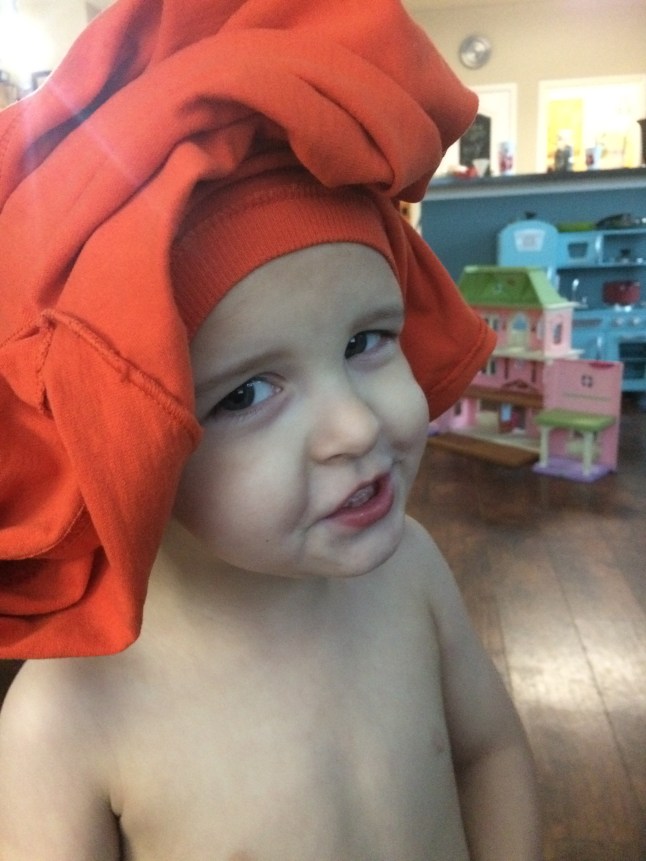

Ooh boy – this one is F.U.N.  Right?  Nothing could make me show my crazy quicker than a toddler on the floor of Target throwing a royal tantrum.  And why does it always happen right when all the other shoppers are in the same aisle as I am watching and waiting to see how I handle it?  Public entertainment at its finest.  Not.  I have so much experience with public tantrums that I sometimes feel like we could have our own reality show.

This one is all about testing boundaries.  Kids need to know what their limits are to feel safe.  Have you ever noticed how kids play differently on a playground with a fence than they do on a playground without one?  On playgrounds that have no fence or protective barrier, kids tend to stay close to the middle.  They play mostly on the playground and don’t venture out very far.  But on a playground with a protective fence, they’ll play all the way out to the edge.  The fence makes them feel safe so they venture out farther.  Without the fence, they stay closer to the middle where they feel safe.  Kids play best in an environment where they know that they have boundaries and they know where those boundaries are.  Adults are the same way.  We spend more responsibly when we have a budget or plan for spending.  We work more creatively when we know what the parameters of our job are.  Our kiddos are acting out in public mostly because they want to see how we react.  They need to know what’s ok and what’s not.  The most important thing we can do in a public tantrum situation is to remain calm (I’m convinced that toddlers can smell fear!)  and clearly establish those boundaries. If the fit is a small one I usually ignore it and keep walking.  This communicates that I won’t give attention to their behavior. When they don’t get the attention they want, they often switch to a different tactic.  If it’s a big one I almost always pick the kid up and leave the store.  I’ve left grocery baskets hugely full in the middle of an aisle before in order to remove a hysterical kid from a store.  It’s so much easier to discipline when I don’t have an audience.  Note: we don’t spank our kids, but we do use lots of time outs which are easier to do in a less public place (my kids love to perform for an audience).  In both of these situations, I’m clearly communicating to the kid that tantrums aren’t okay. Giving in to tantrums by giving the kid what they want doesn’t solve the problem – it just delays it for another time. Eventually you’ll have to set clear boundaries – might as well bite the bullet and do it right away because the longer you put it off the battle, the harder it is to actually win.

Testing the boundaries isn’t the only reason for fit throwing, though. They also partly just want what they want and don’t know how to express their deepest desires without emotional outbursts.  Sometimes just acknowledging how cool something is and that you understand why they would want it so badly is a great first step in preventing a total melt down.  We often say things like, “Wow!  What a cool toy!  I think I’d like to have one too!  Maybe we should add that to our Christmas wish list!”  or “that would be a great thing to ask for on your next birthday!”  We’ve used lines like this so often that my now eight year old once replied, “No!  Not for my birthday!  I’m not kidding!  I want that!”  She’s the only one who ever called our bluff!  We still laugh about it.

With both lying and tantrums, it’s easy to freak out or feel like there is something wrong with our kid.  Instead, here are some things to keep in mind:

  1. Don’t Freak Out!  This is huge.  The more you freak out, the more your little darling will carry on with the lying, the tantrums, and the screaming.  This is why my oldest stayed in the lying phase for what felt like an eternity.  I was so scared that this was a character flaw in her.  I punished her and shamed her and yelled at her and cried at her.  Nothing worked.  Until I stopped freaking out.  All of those other things I did (which are all horrible, by the way!) were enormous overreactions to something that is simply normal experimentation and development in an innocent little child.  There is no malicious intent here on the part of the child in any of these situations.  They are not trying to make you crazy.  They are simply trying to figure out what works and what doesn’t.
  2. Don’t Test Them!  I did this a lot with my oldest.  I would find something broken and ask her “do you know who broke this?” knowing full well that she did, only to have her lie and say it wasn’t her.  And then I got mad.  I knew she was going to lie, but I tested her anyway just to give her the opportunity to tell the truth.  Yes, they should learn to tell the truth – and they will – but we need to make allowance for the fact that they are really, really small and sometimes temptation is just too big for such a little one.  Instead, why not let them see that you know the truth from the very beginning and encourage them to affirm that truth.  “I noticed that you accidentally broke that toy.  Can I help you try to fix it?”  or “I saw that you ate your sister’s cookie.  Do you think you owe her an apology?”  Sometimes we forget how young they actually are. Can you imagine how hard it would be for a tiny little kid with very little impulse control to not freak out over all the dumb stuff at the checkout stand at Walmart?  I have a hard time not buying all those pretty magazines and the yummy, shiny candy bars – I can only imagine how hard it would be for a two year old.  I bring lots of distractions to the grocery store with me (phone, keys, books, toys, paper and crayons).  Try to distract them before they see the stuff – not after.  Avoid taking them to the toy area – don’t even walk past it if you can avoid it.  We want to set them up for success in every area instead of giving them opportunities to fail.
  3. Don’t Shame Them!  I feel really passionately about this one.  And it could really apply to absolutely every situation with kids.  Just because your child is testing out the truth, it doesn’t mean that they are a liar or a terrible kid.  Before we even get out of the car at the grocery store we remind our kids that they are awesome and responsible and well-behaved and that we expect them to act that way.  When a child believes that you believe in them to do the right thing or to act the right way – they will rise to the occasion.  They want more than anything in the world to please you and to know that you love and support them.  Your support and love should never be dependent on their actions and they need to know that.  The only way they’ll know that is if you tell them and tell them often.  Kids will only behave as well as they believe they can. Your words to them – your belief in them is the fuel they need to do the right things – to behave well – to believe that they can do better.
  4. Don’t Give Up!  Continuing to encourage your child to tell the truth, to act kindly or to think about their actions is an important task – don’t give up.  Praise them every time you notice them telling the truth.  Remind them of the importance of truth telling and being well-behaved (not as a lecture – those never work – but just in regular situations).  Teach them some of the consequences of lying (loss of trust, losing friends, feeling sad, etc) or tantrums (having to leave the store, time out).  One of the things I say to my kids is “you always get in more trouble when you lie than when you tell the truth.”  I also say often, “the truth is the only thing accepted here.”  (this is especially helpful when they are fighting and I’m trying to decipher the true story of what happened.)  I also model it with them as often as I think about it.  I am a serial confessor (more about my confession obsession here) and my kids know this about me.  If I overreact to a situation or yell at them when I shouldn’t I confess to them that it was wrong and ask them for forgiveness.  This may not seem like a huge thing, but it models integrity – which is the root of truthfulness.  Teaching them to always do the right thing (especially when it’s hard) is a great way to encourage truthfulness and better behavior in your children.

SCREAMING.


I have to first admit that I am the mom that judged all the other moms with screaming kids.  I was all, “what is wrong with your kids?!” and “why can’t that mother control her child?!” and “she must be a terrible mother because her kid screams all the time!”  I would like to just say that what goes around, comes around and man, oh man, am I sorry for my dumb and wrong opinions and judgments.  I am now on my second screamer.  And this one is fierce.  It is probably THE most embarrassing thing as a mother to have a kid who screams all the time.  At home. At the grocery store. At the park. At church.  My youngest screams everywhere.  Mad. Sad. Happy. Scared. All of his emotions are expressed through blood-curdling screams.  It’s hard. And stressful. Here are my thoughts on dealing with a screamer:

  1. Find out why they’re screaming.  Even though it may seem really random, every scream has a cause.  Are they wanting something?  Are they trying to tell you or someone else something? Are they scared?  Ask them.  Give them the words they need but don’t have quite yet. They’ll often stop screaming when they are able to tell you what they’re wanting to tell you. Ask questions like, “are you scared?” Or “are you mad at sister?” Or “does something hurt?”  Little ones can often understand far more words than they can actually say. Sometimes they don’t know the words for what they want but they can take your hand and show you.
  2. Resist the urge to fight back. I cannot tell you how many times I have wanted to scream back (and I have once or twice). Those little lungs are powerful. I have had more headaches caused by screaming kids than I can count. It is so very hard to stay calm while a toddler screams in your face. To solve the problem and stop the screaming, the child needs to feel heard and understood. You can’t hear or understand them when you’re not thinking clearly. When that kiddo starts screaming: I take a deep breath, look at their little fingers or little toes to remind me how tiny they actually are, then I calmly remind them to stop screaming and to use their words instead.
  3. Remind them it’s not okay. When my boy screams, I walk over to him, get as close to his face as possible and calmly say, “No screaming. When you scream, you sit.” And then I sit him on his bottom right then and there. This seems to be working for us. At least for now. Find what works for you. But whatever you do, stay calm, speak clearly and respond right away. 
  4. Don’t model it. If your toddler watches you or someone else in your home scream or yell on a regular basis, you’d better believe they are gonna follow suit. You can’t expect them not to act in a way that you are acting. They want to be just like you. Make sure you aren’t modeling bad behavior. 
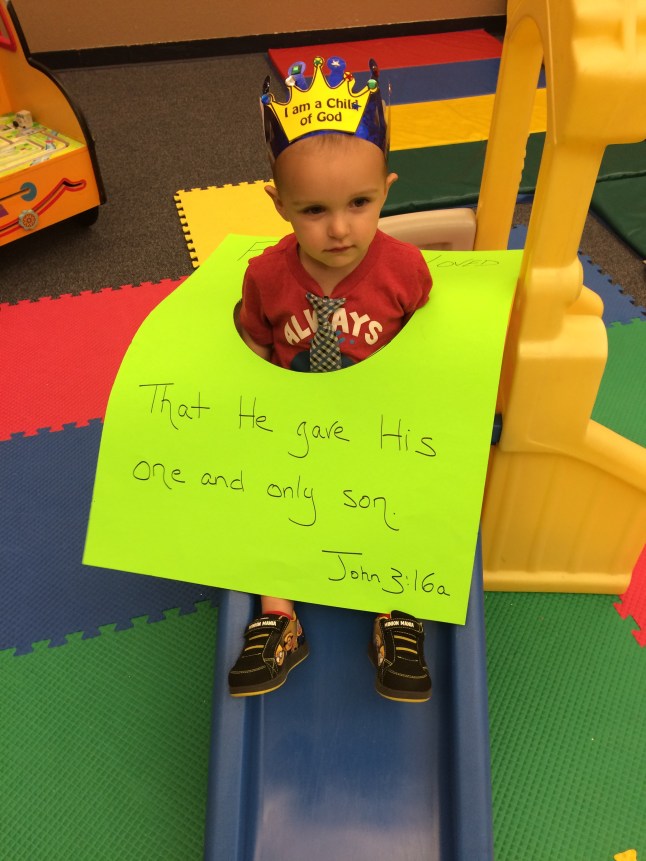

 In all of these scenarios, make sure that you consistently make clear to their kids that they are loved, safe, and accepted just as they are. Even the littlest people can pick up on the idea that they have to somehow earn your acceptance or love. Help them understand that just as we are all accepted and loved by God just as we are, they are accepted and loved by you just as they are. Remember that they are tiny. Look at their little fingers and their little toes and remember how small they are. They are doing the best they can. You are doing the best you can. You’re both gonna make it. Don’t give up. 

Love you guys. 

Kim

 

Seated With Christ – A Book Review

What a beautiful and thoughtful book.  Filled with profound ideas and practical advice, Seated with Christ by Heather Holleman, is both encouraging and insightful.  The book is based on the idea that our identity is rooted in our relationship with Christ and that there is nothing else that gives us more worth or value than the fact that we are children of God, loved and chosen by Him.

Seated with Christ is broken into four sections.  The first section introduces the idea of what it means to be seated with Christ.  The most memorable part of this section (and possibly the entire book) is the analogy the author draws from the round table of Camelot to the table of Christ.  The remaining three sections cover what follows as a result of our being seated with Christ – freedom, surrender and mission.  Each chapter ends with a “sit and savor” section filled with questions and thoughts for further application or discussion.

Using personal stories and insights, the author takes us on her own journey from fighting for a seat at the table to realizing the seat was already hers to enjoy.  Her stories throughout were wonderfully written and applicable to her points, however it was in the second to last chapter, Seated and Sent, that I felt more connected to the author than at any other point in the book.  I came from a very different background and have walked a vastly different journey than Heather Holleman, but we both share the desire to belong.  To feel valued.  Loved.  Accepted.  And that’s what I believe her book is all about.

I appreciated the knowledge, passion and thoughtfulness the author brought to this book and I believe it would be an awesome book to use in a women’s group or bible study.  Every woman should hear, believe and understand the truth about our identity in Christ and this book, Seated with Christ, is a fabulous tool to be used for that purpose.


Disclosure: I received a copy of this book from the publisher in exchange for an honest review.  I was not required to write a positive review.  All opinions are my own.


Liberating King – A Book Review

“A thing resounds when it rings true, ringing all the bells inside of you.” – Andrew Peterson, More

Liberating King, by Stephen Miller, rang so many bells inside of me. Bells of truth and acceptance. Bells of forgiveness, worthiness, and peace. The truth of this book so resounded in the depths of my soul that I find myself profoundly moved by it and immensely grateful for the beauty within its pages.  I cannot oversell this one – I honestly believe this book could change your life. I believe it’s changing mine. I’ve read some of these words over and over again, while praying that God would write them on my heart and that they would permanently become a part of who I am and how I live.

In only ten short chapters, Worship Pastor Stephen Miller, covers themes such as suffering, anxiety, forgiveness, people pleasing, loving others, identity and so much more.  There truly is not one word wasted in this 120ish page book.  The major theme of the book, as the subtitle suggests, is about freedom.  It’s about the freedom that we find when we focus our hearts and minds on who God is, what God has done and what our response should be.  He says on pg 19, “There is a difference between logic and truth.  Logic speaks to your intellect.  Truth speaks to your soul.  Solid logic may free you up in many ways, but it will never be powerful enough to set you free.  Only truth can do that.”  He talks throughout the book about truth – rehearsing it (or meditating on it), being filled with it (Holy Spirit indwelling us) and experiencing it (through Jesus who is the Truth).

I don’t personally know Stephen (the author).  I have never met him (although we live and work relatively close to each other).  But after reading this book, I feel like I DO know him.  He pours his heart and soul into this book and it reads almost like a long letter from a loved one who has been so changed by the Truth that they want to share what they’ve learned along the way.  It’s so personal and tender at times that I felt honored to be reading it.  At the end of each chapter there are three “Questions for Application and Discussion”  that would easily make this book into a wonderful Bible Study for women, men, worship teams, church staff, small groups, or even simply a family.  Scripture is woven so beautifully throughout this book and are the basis for every thought and word throughout its pages.
I learned so much in this little book.  I was challenged, inspired, convicted and encouraged.  There are things I’ve been holding onto for a very long time that this book is helping me to release.  I have been quoting passages of this book to everyone around me (whether they want to listen or not) and have read entire portions aloud to my family and to my Worship team.  I feel like Liberating King should be required reading for every Christ follower.  It may be the best book I’ve read all year (and I just finished my 23rd book this year)!

Go buy it.  Read it.  Give it away.  I simply cannot recommend it highly enough!

Here are some of my favorite Quotables from this book:

“..I am created in his image, purchased with his blood, adopted into his family, filled with his Spirit, and given an eternal inheritance in his kingdom.  Day by day, I am growing in the understanding of who I am in Christ, and as I grow, I am able to truly love others well.” (pg 70)

“Worship is our response to God, allowing us a glimpse of the unimaginable, a comprehension of the incomprehensible, a revelation of the infinite breath and length, height and depth of the love of God.” (pg 68)

“Faith chooses to love even when you have been hurt; to forgive, even when the pain is still fresh.” (pg 53)

“We can worship no matter what our circumstances because God’s character is not circumstantial.” (pg 38)


Disclosure: I received a copy of this book through Baker Books Bloggers.  I was not required to write a positive review.  All opinions are my own.

BakerBooksBloggersSquareLogo


They Were Christians – A Book Review

I read this book over a period of about three days.  It was just that good.  Like a mini history lesson combined with an inspirational sermon, They Were Christians by Cristobal Krusen was both motivating and informative.  It reads like a collection of short stories, each one standing on their own.  The author has such a talent for storytelling that I felt drawn into the lives of each of these people, but he also has obviously done extensive research on each of the subjects.  Including well known historical figures such as Frederick Douglass, Florence Nightingale, Abraham Lincoln and Charles Dickens as well as the lesser known Dag Hammarskjold, Jen-Henri Dunant and Chiune Sugihara this book truly serves to convince the reader that absolutely anyone can make a significant contribution to the world if only they will commit their lives and hearts to the cause of Christ.

I had just finished reading “Letters to a Birmingham Jail” before I read this book, so the account of Frederick Douglass was particularly moving to me, though ALL of the stories in this book were extremely well written and affected me deeply.

Each chapter begins and ends with the author’s own stories and thoughts on each of the men and women of faith.  His thoughts after the story of John D. Rockefeller, Sr. were particularly poignant and it was obvious that he was personally inspired by the story of Charles Dickens.

They Were Christians is filled with stories of regular people who faced enormous obstacles yet, with a foundation of faith in Christ, overcame those obstacles and went on to make an incredible impact on the world.  Stories of perseverance, faithfulness, love, kindness and sacrifice.  Stories like how Charles Dickens wrote out The Life of Our Lord specifically to teach his kids and grandkids about Jesus.  Or how John D. Rockefeller, Sr. gave away half of his fortune and started multiple schools, hospitals and churches all over the world.  Or how Florence Nightingale was willing to give up a life of luxury and excess to pursue her passion for taking care of the ill and suffering, ultimately pioneering a new standard in nursing and contributing greatly to the field of medicine as a whole.  It is impossible to read this book and not be inspired to stand up, step out and faithfully pursue your own God-given task in this world. 

Some of my favorite quotables from this book:

“Slowly the truth began to permeate Fyodor’s soul – all men are equally men; all men are made in the image of a loving God.  The goal of universal brotherhood is not to be attained by class warfare but by mutual love and forgiveness.” (chapter on Fyodor Dostoyevsky, pg 101)

From the chapter on Abraham Lincoln, regarding his thoughts about the Bible: “It seems to me that nothing short of infinite wisdom could by any possibility have devised and given to man this excellent and perfect moral code.  It is suited to men in all conditions of life, and includes all the duties they owe to their Creator, to themselves, and to their fellow man.” (p131)

From the chapter on Joseph Lister and Louis Pasteur:

A quote from Louis Pasteur: “One does not ask of one who suffers: What is your country and what is your religion?  One merely says: You suffer, that is enough for me.” (p145)

The author’s thoughts on Lister and Pasteur: “They were individually gifted by God and uniquely motivated by his Spirit to work for the common good.  All of us can be forever thankful for the tenacity they displayed, the discoveries they shared, and the indelible and life-changing contributions they made in this world.” (p160)


Disclosure: I received a copy of this book through Baker Books Bloggers.  I was not required to write a positive review.  All opinions are my own.

BakerBooksBloggersSquareLogo


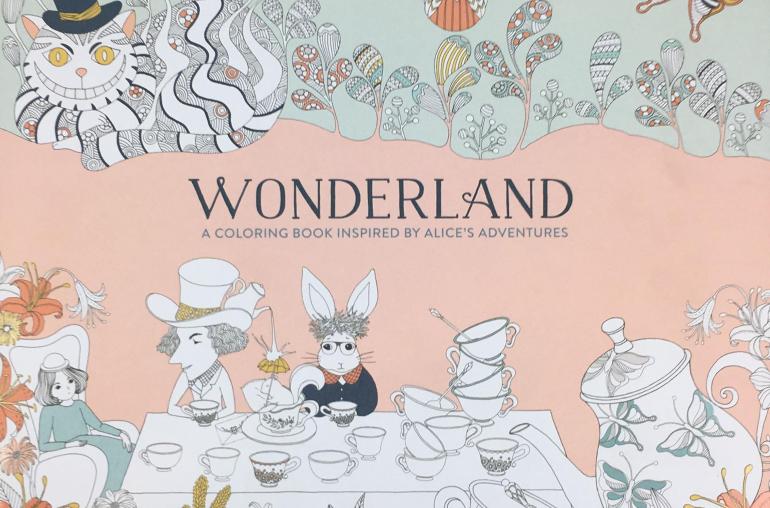
Wonderland: A Coloring Book Inspired by Alice’s Adventures – A Review

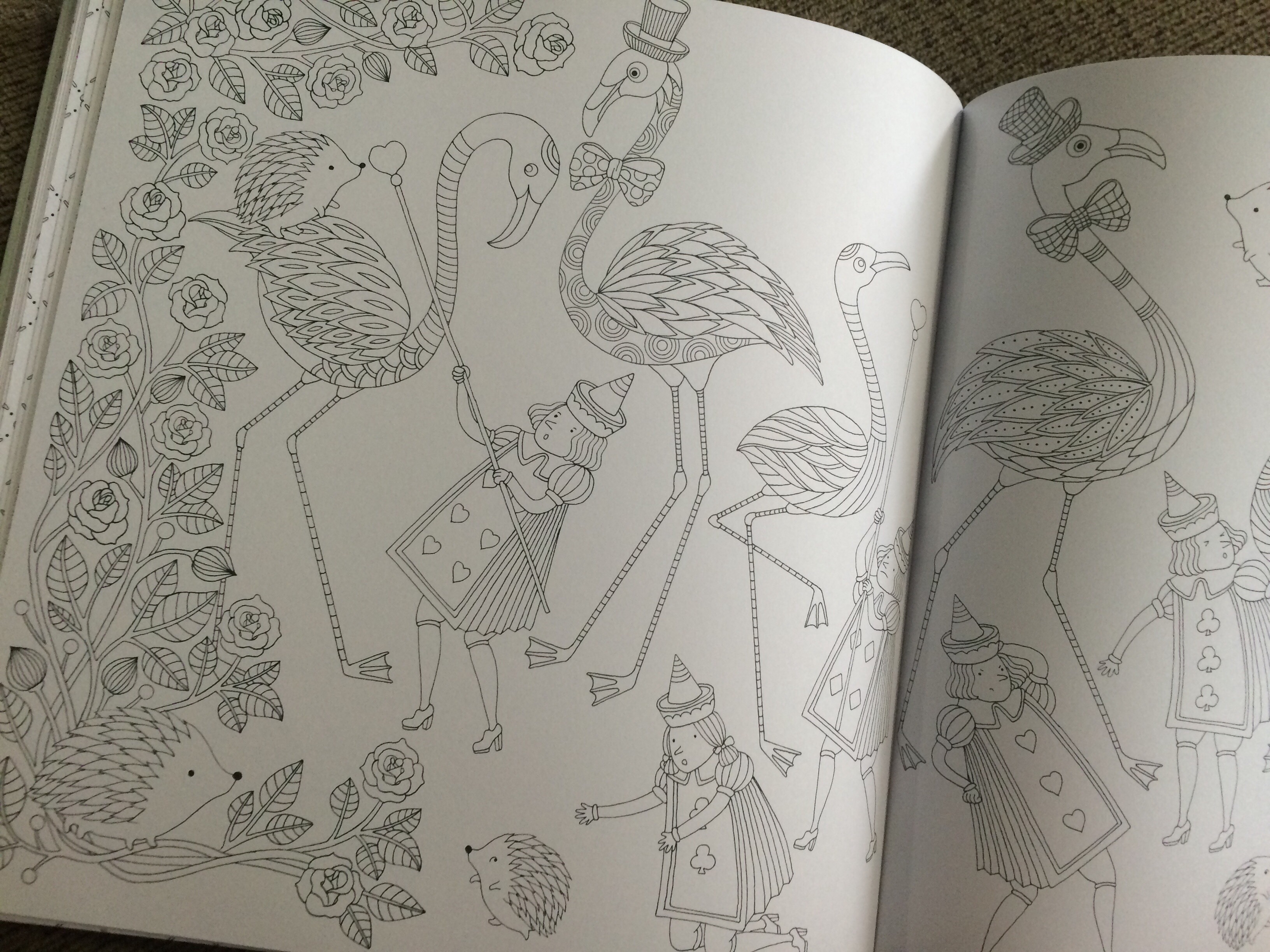
This is, by far, my favorite coloring book I’ve seen.  If you have any affinity for Alice and her friends from Wonderland, you will LOVE coloring the pictures in this book!  If you’re not on the coloring bandwagon yet, this book will give you the perfect opportunity to dive in!  Research supports the health benefits of coloring books to reduce stress and anxiety, increase relaxation and focus and to spark creativity.  For me, though, it’s just sometimes nice to feel five years old again with nothing to worry about besides staying inside the lines (or not).  My fifteen year old is super excited about this book, though, so I’m pretty sure it will become hers.  This is truly a coloring book that the entire family could enjoy – it’s beautiful enough for adults to want to participate, but creative and fun enough that my younger daughters were super excited when it arrived.

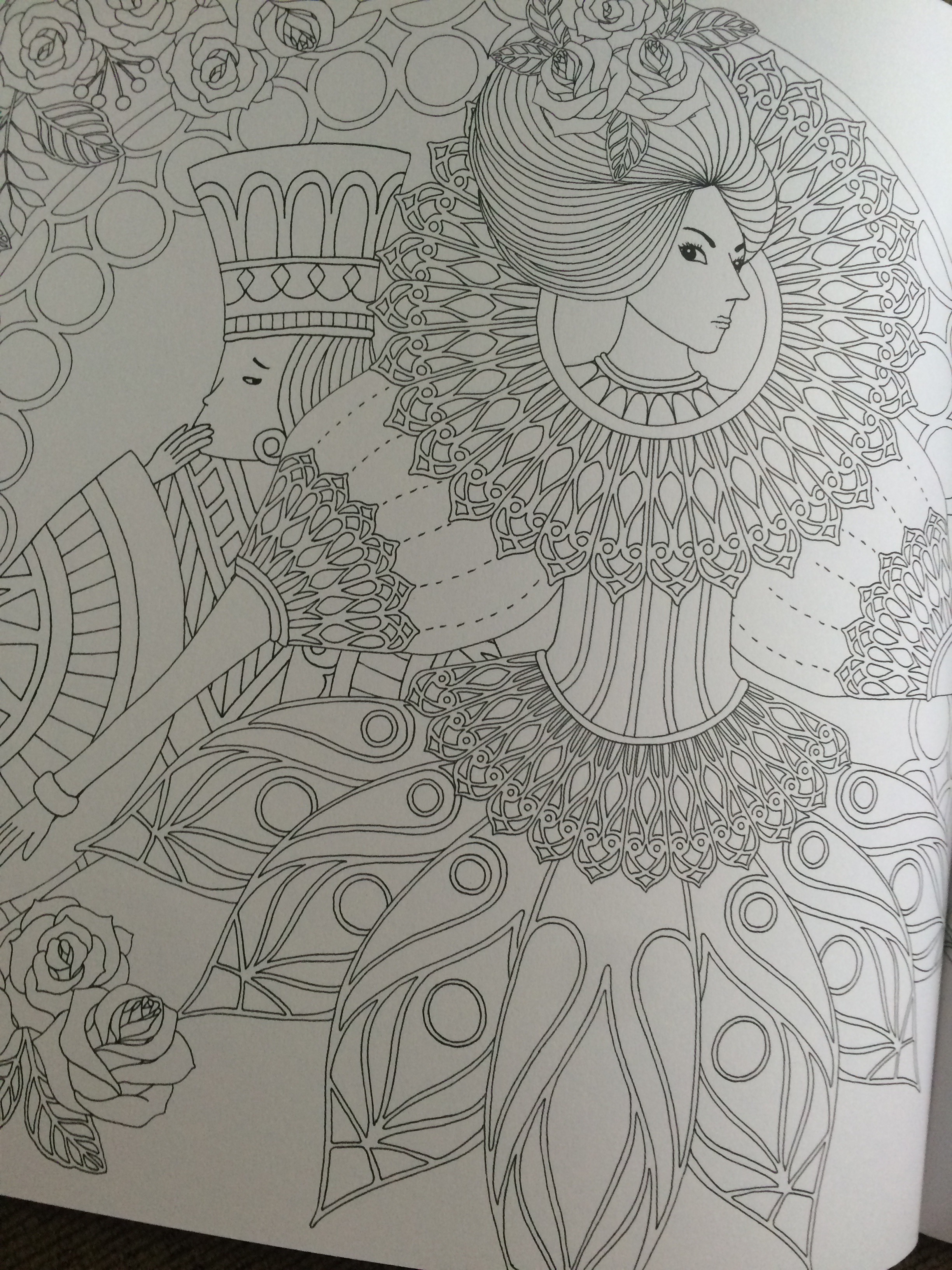
This big, beautiful coloring book is just so fancy and fun!  It even has a dust cover – that you can color!  The pages are thick and the drawings go all the way to the edges – absolutely no space is wasted in this gem of a coloring book.  My girls are all a bit obsessed with Alice and her friends, so I had an immediate connection with it.  It’s a bit wonky and quirky, but the designs are also beautiful and intricate.  Hedgehogs and flamingos, flowers and owls, royal frogs and cupcakes – all of which are so fantastically imaginative and filled with shapes and patterns that would make anyone excited to join in on the coloring fun!


There are nine little chapters in this 80 page book, each with a theme and short paragraph of story inspiration.  There are even a few pages with puzzles to solve as you go through the book.  This is definitely more than a coloring book, it is a coloring adventure where the reader becomes the storyteller.

This book would make a wonderful gift for anyone with an affection for Alice and her friends, or even as a sweet little gift for yourself.  I hope you’ll check it out!


For more info on the author, Amily Shen, go here.

For more info about this book, go here.

You can also click on the image above to go directly to the book’s Amazon page.

Disclaimer: I received a copy of this book from BloggingforBooks.com for the purposes of this review.  I was not required to write a positive review.  All opinions expressed are my own.