Letters To A Birmingham Jail – A Book Review

This is one of the most important and eye-opening books I’ve read in a long time.  Maybe ever.  Being the terrible student that I was, I never really paid attention in history class.  I used to joke that the only thing I knew about history is that World War I came before World War II.  So when I started homeschooling my kids about four years ago, I began learning alongside them about world and American history.  It’s been an awakening experience beyond anything I could have imagined.  We recently wrapped up several weeks on the Civil War, so all of the stories of that time period were fresh in my mind and my soul when I chose this book to read and review.  To say that I read this book with a tender heart would be a gross understatement.  I was already wrecked going into this book, so the words within “Letters to A Birmingham Jail” ripped my heart wide open.

Before reading the book, I first read Dr. King’s “Letter From a Birmingham Jail” two times and listened to him read it once (there are audio recordings of Dr. King reading his letter online).  His letter stands as a beautiful and horrible picture of the time in which he lived.  It is beautiful, sad, true and prophetic all at the same time.  This book, Letters To A Birmingham Jail, is filled with stories and thoughts of thankfulness for our collective progress and remorse over our collective failure in regards to Dr. King’s mission of racial justice and reconciliation.

“Injustice anywhere is a threat to justice everywhere.  We are caught in an inescapable network of mutuality, tied in a single garment of destiny.  Whatever affects one directly, affects all indirectly.” – Martin Luther King, Jr., Letter From a Birmingham Jail

The book consists of ten chapters, each written by a different person.  The writers include mostly pastors, but they are also professors, activists, authors and speakers who are all wholeheartedly committed to racial justice.  The tone of the book is one of education (helping the reader understand the history but also the current state of racial reconciliation, especially within the church) and one of hopeful expectation of a better future in which we all remember, as Mother Teresa once said, that “we all belong to each other”. 

There is so much within this book that we all should read and understand.  Like the idea that justice (during the civil rights era, but also today) is often an economic issue.  Or the truth that evil cannot be humanly overcome and that, as John Perkins wrote, “Justice is birthed from the very heart of God.  He revealed divine intent in the act of creation when He created man in His own image, in His own likeness.  He put all people on an even plane, regardless of color – worthy of dignity and respect.” (pg. 45)  There is also much throughout this book that addresses King’s accusation of the “white moderate” who, instead of fighting alongside blacks, seemed to be almost entirely silent.  He says in his Letter From a Birmingham Jail, “Shallow understanding from people of good will is more frustrating than absolute misunderstanding from people of ill will.  Lukewarm acceptance is much more bewildering than outright rejection.”  He also says, “We will have to repent in this generation not merely for the hateful words and actions of the bad people but for the appalling silence of the good people.” 

Each of the chapters begins with a letter from that chapter’s author to Dr. King himself.  Some are filled with gratitude and respect for Dr. King, others are filled with remorse and new revelations as a result of Dr. King’s mission and their own life experiences.  In Pastor John Bryson’s letter (pg 94) he wrote, “While the church has much to do in the way of change, none of us wants to be guilty of doing it again: remaining silent when a brother is in need.  Turning a blind eye to injustice when a brother’s dignity is threatened.  Asking a brother to wait when his very life is at stake.”  What a beautiful and heartfelt statement.

This book addresses so many topics related to racial justice: displacement, intentionality, white privilege, majority culture, passivity, color blindness and a lot about the Gospel of Jesus Christ.  There are many stories throughout, however most of the book reads like a string of really powerful sermons tied together with the thread of kinship, unity and grace.  I was so moved by this book that I have spent the last several weeks studying and learning about the history of oppression in our country and in our churches.  I have found groups that are currently and actively working towards racial justice and I am learning from them what that looks like and how I can help.  There is so much great information out there to inform and inspire God’s people to fight against systematic oppression and racial injustices that ARE CURRENTLY happening all over America and the world.  I pray that this book will be a new beginning for me – eyes wide open, heart and soul convinced that “every human being has been created in the image of God and has dignity written on their soul.” (Crawford W. Loritts Jr., pg 76)

For more on this topic, I hope you’ll check out this podcast by the Liturgists called Black and White: Racism in America.  Everything they do is fantastic – you should go ahead and just subscribe to their podcast!

Also, here’s a great ministry called Be the Bridge.  Their website has tons of resources and information on being the bridge to racial unity.  They also have a Facebook group you can subscribe to if you’re interested in being a part of the conversation.


Disclosure: I received a copy of this book from the publisher in exchange for an honest review.  I was not required to write a positive review.  All opinions are my own.

Read With Me Bible for Little Ones – A Review

read with me bible

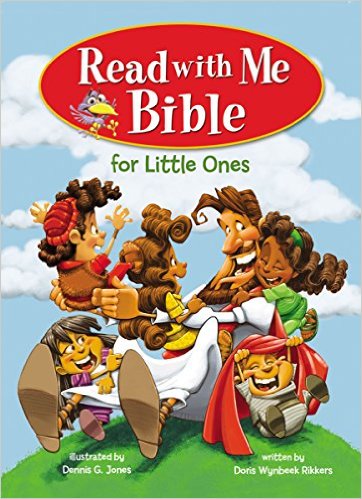
What a sweet little Bible for toddlers!  This tiny treasure is just the perfect size for little hands and the pictures are fantastic.

The cover is padded and sturdy, the pages are thick, and the size of the book is small enough that tots can hold it and turn the pages themselves (we all know that toddlers like to do things all by themselves!), but it is still large enough that adults will enjoy reading it to their little ones.  There are 32 full color pages within the book that are each covered in fantastic, full color illustrations by Dennis Jones.  The illustrations are interesting and comic-like (in a great way).  The words are simple enough also that emerging readers could use this as a young readers Bible.

There are eight stories represented in this little Bible including Creation, Jonah and the Birth of Jesus.  This Bible is more for little ones to read on their own, so it is very simple in content and actual words.  If you’re looking for a Bible to read to your kids, I cannot recommend The Jesus Storybook Bible highly enough.  However, if you’re looking for something for your little one to hold and read and treasure as their very own, the Read With Me Bible for Little Ones would be a very good choice.
I review for BookLook Bloggers

Disclosure of Material Connection: I received this book free from the publisher through the BookLook Bloggers <http://booklookbloggers.com> book review bloggers program. I was not required to write a positive review. The opinions I have expressed are my own. I am disclosing this in accordance with the Federal Trade Commission’s 16 CFR, Part 255 < http://www.access.gpo.gov/nara/cfr/waisidx_03/16cfr255_03.html> : “Guides Concerning the Use of Endorsements and Testimonials in Advertising
 

Brazen – A Book Review

“We need to welcome our brokenness, but also our belovedness.  This is the brazen path.” – p111

Brazen, by Leeana Tankersley, is kind of like a really great sermon  The kind that starts off gentle and kind and quiet and then it grows in intensity and volume as it goes until the end when the pastor is passionately proclaiming truth, the people are amen-ing, there are roars of applause and cheers as the whole room feels this kind of kinship.  Like we’ve all just grown together, like something is different now, like we’ve all just moved a step forward towards the holy and the good.  Covering topics as huge as self-image issues and giving ourselves grace and topics as small and hilarious as how we often deny even as basic of a need as needing to pee, this gem of a book will sooth your weary heart and inspire your very soul.

I had never heard of Leeana Tankersley before this book arrived on my doorstep and I feel a bit deprived about that.  Her voice is confident but kind, gentle but firm, inspired but a little irreverent at times (in such a good way).  There is nothing about this book that is anything but loving and helpful.  I was so very blessed by it.

The subtitle of the book is “the courage to find the you that’s been hiding”, and I believe that’s exactly what the author sets out to inspire.  The book is organized into three parts: Receive (your identity), Reclaim (your voice) and Recover (your soul).  The chapters are very short (just a few pages for most) and the writing style makes them easy to read.  I read a lot of this book at stop lights, in drive thru’s, while waiting in line and in doctor’s offices.  However, since there are so many wonderful things to take in and digest throughout, I believe it’s actually better read in small doses over a longer period of time.  Each chapter has a “Reflection and Expression” section and gives ideas/suggestions for creating your own “Brazen” board.  I read the book so quickly (a few weeks) that I skipped the Brazen board – but as the book went on I wished that I hadn’t.  I love the questions, thoughts and reflections provided at the end of each chapter and they are a great way to really take in the beauty presented in the pages of this mighty work.

Often I read books that could have covered their subject matter in fewer words.  Rarely do I read a book in which every word was used so carefully and strategically that I don’t believe even one should have been left out (a testament to not only a great author, but also a fantastic editor).

If there is any part of you that feels that you are not living freely, wholly, confidently, comfortably within your own skin, and with the whole and complete love and grace of God – you need to read this book.  It will speak to all the parts of you that feel that you are somehow not enough and it will help you remember that you are not only enough, but you are created and loved by God and you have a part to play in this world that is real and significant and beautiful.

Here are some of my favorite quotables from this book:

“Hiding can look like a thousand different postures and performances, but one of the most egregious is swallowing down our own God-breathed strength.” – p104

“…my lovability is not contingent on how well I execute the logistics of life. …I am never more loved than in the moment of my failings, my faltering, my humanity.  I’m never more loved than the moment when it all falls apart.” – p88

“When shame is my lens, my eyes are unreliable.” – p67

“Life doesn’t demand our presence.  It asks.  And we decide whether or not we will tolerate the beauty we’re currently standing on.” – p59

“I wonder if grace is actually in the reduction of things, a gentle or not-so-gentle returning to the bottom line.  Who we are.  Who God is.  How we are loved.  An uncovered nakedness.  Grace is the reminder that the Creator and his creation are enough: our Created Center is gold.” – p192


Disclosure: I received a copy of this book through Baker Books Bloggers.  I was not required to write a positive review.  All opinions are my own.

BakerBooksBloggersSquareLogo

Rescuing Jesus: A Book Review

In “Letters To A Birmingham Jail”, contributor John Bryson writes, “Ugly parts of American history need to be owned, acknowledged, and ought to lead us to ask for forgiveness and repent.”  Following that line of thought, Evangelical history also needs to be owned, acknowledged and must lead us to seek forgiveness.

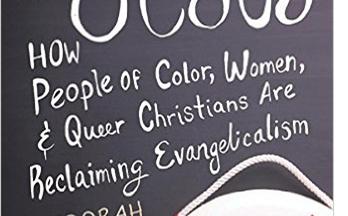
Rescuing Jesus, written by Deborah Jian Lee, is a book I will not soon forget.  It is a book that not only covers the history of evangelicalism – ugly parts and all – but it also seeks to discover a new way for Evangelicalism, a way pioneered by those who have been historically left out of evangelical churches and organizations, those who have been pushed to the margins of evangelicalism.  Written from a journalistic perspective, this book is filled with stories from people of color, women and LGBTQ Christians that are both depressing and inspiring.

I grew up in an evangelical Southern Baptist church and thought I knew what evangelicalism was all about – I thought I knew the history.  I’ve spent the last year or so realizing that I only knew a partial history – the flattering parts that evangelical leaders are eager to share, but nothing of the oppression and segregation that evangelicalism not only participated in but also those things that we have been directly responsible for.  This book laid out those things (slavery, segregation, oppression of women, shunning of LGBTQ people to name a few) in the context of personal stories.  It is one thing to say that the church has not handled the LGBTQ community well.  It is another thing entirely to share the stories of LGBTQ people who have been so horribly mistreated by the collective evangelical church or by evangelical organizations to such a degree that it affected every area of their lives.  It is one thing to understand that the church perpetuated the systematic oppression of blacks during the civil rights era.  It is quite another to tell stories of people who are still being oppressed today by these same evangelical organizations.

The book is not, however, about all that is wrong with evangelicalism.  It is about how all of it is changing.  It’s about the stories of people of color, women and LGBTQ Christians who are pushing past the prejudices against them and taking back evangelicalism.  They are saying that God’s grace extends to them too.  They are telling the world that Jesus is for everyone.  They are following in the footsteps of Martin Luther King, Jr and Susan B. Anthony, and doing the hard work of the Gospel.

The stories told in this book take real, serious issues and put flesh and bone on them.  They tug on you and push on you in a way that will leave you grieving our collective evangelical past and hoping for a better future.  I will not soon forget these stories.  I am so very grateful for the years of hard work by its author, Deborah Jian Lee, and I pray that her words reach far and wide.

For more on these topics, you might want to check out these books as well (click on the books to go to the Amazon page):
      

How To Live in Fear – A Book Review

“How to Live in Fear: Mastering the Art of Freaking Out” by Lance Hahn is truly an exceptional and important book for anyone who struggles with panic, fear or anxiety or anyone who loves someone who does.  The book is organized in three parts.  The first: My Story walks through the author’s story of fear, panic and anxiety.  The second section: Our Journey Together covers shared experiences, feelings, issues of anxiety sufferers as well as practical ways to prepare for, cope with and heal from panic and anxiety.  The last part: The Journey with Our Father takes a look at panic and anxiety from a biblical perspective.

First, I must say that the simple fact that this book has been written and published, and by a pastor, is an enormous step towards the collective church understanding and supporting people with mental health issues such as anxiety.  Not only is this book an important one, it is also extremely well written and filled with encouraging, supportive, life-giving words.  As someone who struggles with significant anxiety, I found this book to be a breath of fresh air.  To read of a pastor who unashamedly admits to struggling with extreme anxiety and panic attacks is so very refreshing in a church culture that often ignores and/or shames people with mental health issues.

In How to Live in Fear, you’ll find the definitions and explanations of fear, worry, anxiety, panic and stress as well as many stories and examples of what each of these things look like in real life.  There is an entire chapter devoted to medication – dispelling the myths and how to determine if it’s right for you.  Another chapter talks about ways to manage anxiety from an internal perspective (managing our feelings and thoughts), while another covers ways to manage it from an external perspective (exercise, nutrition, hobbies, etc).

In the final section, The Journey with Our Father, the author covers the spiritual component to anxiety.  Although every word in this book spoke to my spirit, this final section was definitely my favorite.  After talking about who God actually is vs. who we believe Him to be and why that matters in relationship to our anxiety, the author talks about the tools needed to cope with anxiety on a spiritual level.  He points back to scripture over and over again, giving the reader entire lists of scriptures about fear.

There is so much about this book that is encouraging and helpful.  Pastor Hahn not only shares his own story so that we can relate to him, but he also gives hope and help to all who live in fear on a daily basis (like me).  I cannot express how desperately I needed this book or how grateful I am for the courage of its author.  I hope and pray that “How to Live in Fear” finds its way into the hands of everyone who needs it.  Maybe you’re one of those people.  If so, you can click the picture above to find the book on Amazon.  I hope sincerely that it gives you the hope and help that you need.

“I know that some days in this life are discouraging and hopeless, but do not lose hope.  Don’t let the conditions of today shape your soul forever.  You might be sitting in a trial right now, but that doesn’t have to consume or define you.  God is not limited by our limitations and is not afraid of impossible situations.  Pray as though you might be healed today.  Live so that God is glorified through your suffering.  Lift your head, my friend.  Salvation is on its way.” – p135


I review for BookLook Bloggers

Disclosure of Material Connection: I received this book free from the publisher through the BookLook Bloggers book review bloggers program. I was not required to write a positive review. The opinions I have expressed are my own.

The Truth About Angels – A Book Review

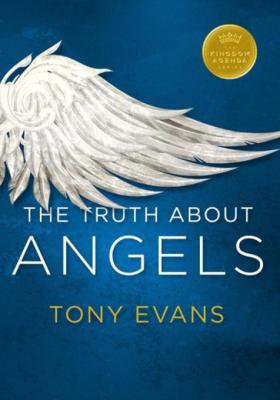
First of all, this is a super short book.  I read the entire thing while I was waiting for the color to set on my hair at the hair salon.  Don’t let the length fool you, though – this book is filled with interesting and important information!  The Truth About Angels, written by Dr. Tony Evans, answers three basic questions about angels: Where Do Angels Come From?, How Do Angels Serve?, and How Do Angels Work?.  It also has a chapter on “Accessing the Power of Angels in Spiritual Warfare”.  Not one word is wasted in this 64 page booklet and I learned so much from its author.

Some of the topics covered are things like guardian angels, the personal nature of angels, the difference between angels and demons (this part was fascinating!), the purpose of both angels and demons, and so much more.  This topic is one that I had very little knowledge of going into this book.  After reading it (twice actually), I find myself talking about it regularly, recommending it to pretty much everyone, and searching the scriptures for more information about angels, demons and the spiritual realm.  If this book was meant to stir up a desire in the reader to learn more on the subject, it was hugely successful in my case.

The only complaint I have about this book is that it wasn’t long enough!  I would have loved for each chapter in this book to be about twice as long.  Most books drone on and on about a subject to the point that you are entirely done with it when it is over.  Not so with this one – I have more questions now than I have answers.  I’m hoping that at some point Dr. Evans will continue this work in another book so that I can continue learning from his knowledge on the subject.  If you are at all interested in the topic of angels, demons or spiritual warfare, I cannot recommend The Truth About Angels highly enough!


Disclosure: I received a copy of this book from the publisher in exchange for an honest review.  I was not required to write a positive review.  All opinions are my own.
Make It Zero – A Book Review

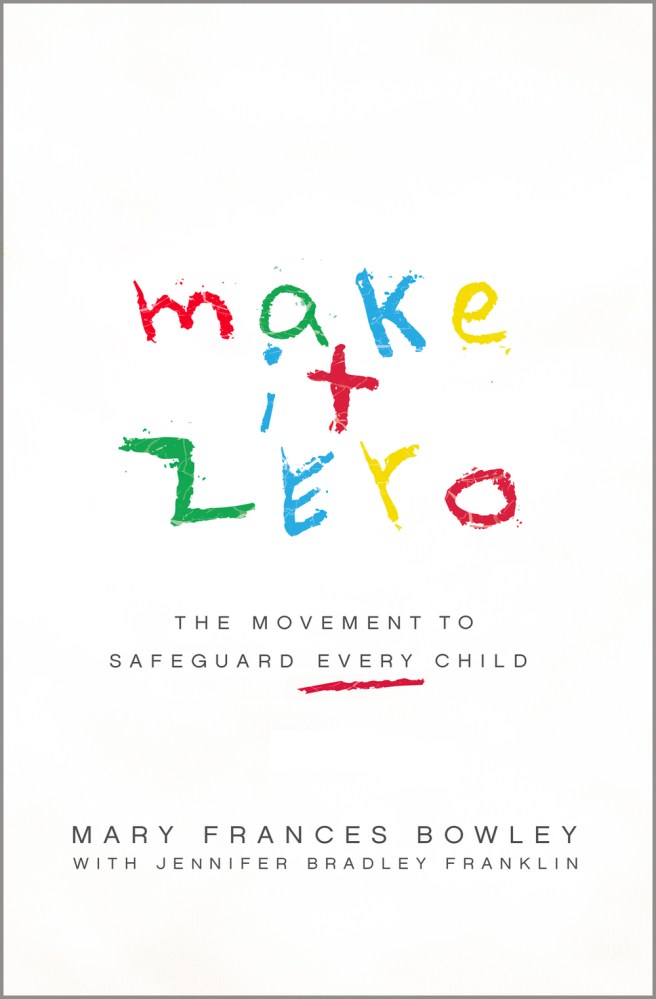
I just finished reading Make it Zero by Mary Frances Bowley and I have to say that it wasn’t exactly what I expected.  I expected expert advice, tons of statistics and practical tips on how to get involved in “the movement to safeguard every child”.  What I received in this book was all of that and so much more.  Going into this book, I already knew quite a bit about child abuse, neglect and poverty – at least from a distance.  I have read the statistics.  I have heard a few stories.  I have been through foster/adopt training.  I thought I knew some things.  After reading this book, I realize that I don’t really know much at all.  Not really.

Make It Zero is filled with stories.  Tons of them.  Some of them made me think, some made me gasp and more than one of them made me cry – especially the ones near the end of the book.  There are five areas covered in this book: poverty, hunger, isolation, abuse and trafficking.  The authors very carefully chose stories that go along with each of the areas to help the reader understand the realities of each of these five areas.  I can imagine that if someone were to read this book with zero knowledge of the subject, they would be quite shocked at the statistics and stories provided in these pages.

Each section begins with a definition, statistics and a quote or two and each section ends with very practical ways to get involved.  My favorite part of this book is that it gives ideas for everyone to get involved: children, families, parents, schools, churches – and it makes suggestions for groups, individuals, teaching opportunities, how to talk to your kids, and much more.  There are also tons of resources listed throughout this book to gather more information, get more involved or even to receive free training on how to help keep our kids safe.

Whether you have kids or you don’t, whether you work at a church, a medical facility or a school, whether you think you know everything there is to know or you know nothing at all on this subject – you need to read this book.  I wholeheartedly agree with this statement from the author, “I believe that massive intentional living with eyes alerted to children around us and loving care could drastically change our world.”


Disclosure: I received a copy of this book from the publisher in exchange for an honest review.  I was not required to write a positive review.  All opinions are my own.
Writing in the Margins

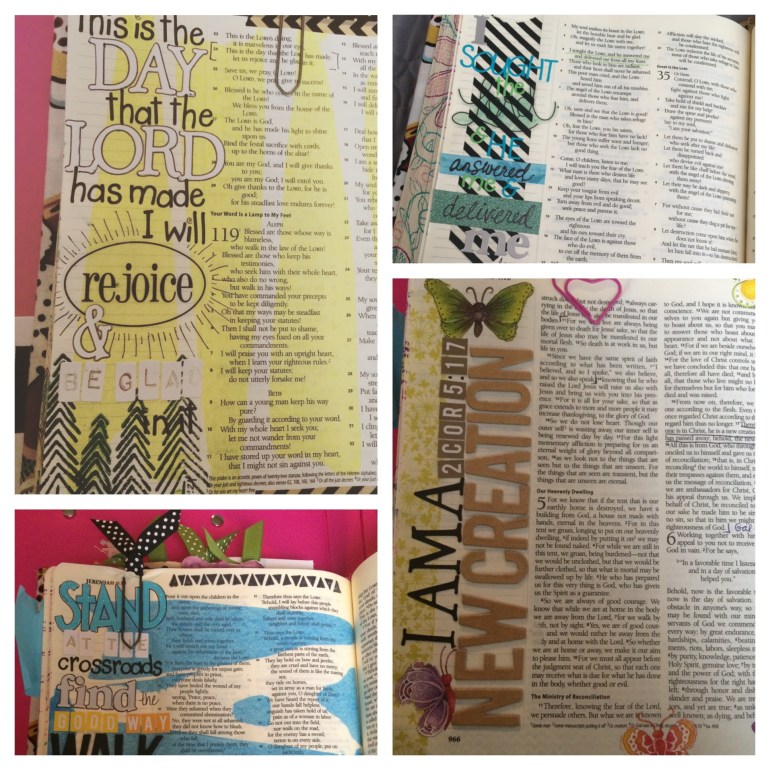
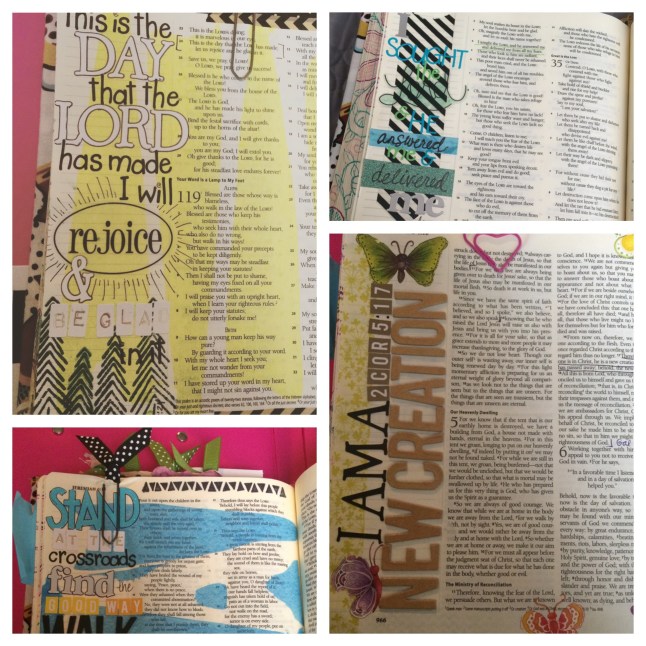
I’ve been re-reading a book lately called, “Writing in the Margins” by Lisa Nichols Hickman (which I cannot recommend highly enough!).  It is a book about learning to write in the margins of our Bibles to study, to connect with God and to also connect our story to God’s story.  All throughout the book are stories about people who wrote in the margins of their Bibles.  One of them is the great musician, Johann Sebastian Bach.  Here is a bit of what I read:

In the Bible, next to 1 Chronicles 25, Bach penned, “This chapter is the true foundation of all God-pleasing church music.” 
Beside 2 Chronicles 5:12-13 he wrote, “In devotional music, God is always present with his Grace.”
 
Exodus 15:20 is marked, “First prelude for two choirs to be sung to the glory of God.” 
Next to Psalm 119:158, he wrote a “nota bene” or a “good word” to himself to take note so that he would truly hear and absorb the truth of the text, “I see the despiser and it grieves me that they do not keep your word.”  
And he noted 1 Timothy 6:12 (NIV), “Fight the good fight of the faith.  Take hold of the eternal life to which you were called when you made your good confession in the presence of many witnesses.”
 
Bach also wrote in his Bible: “My hymn sounds like this: Give to God the glory which is due to the one true living God, the only glory, praise and honor in heaven and on earth.”  In these annotations we see Bach looked to the sacred word of the text, in his scriptural disciplines, to find both inspiration and a sold foundation for all his life’s work.
In Bach’s annotations we see the markings of a great mind and musician at work.  For this, Bach looked to the sacred word of text in his scriptural practice to find direction for his anger, momentum for his music, absolution for his sin and dictums to guide his life.
 
What we see in Bach’s Bible is that back-and-forth between insight and life work, the verse of the Bible, and the vocation of our lives.
 
What beautiful words. I pray that today we will all be able to look to Scripture the way that Bach did – to find: perspective in our emotions, encouragement for our life’s work, forgiveness for our sins and direction for our every day life.

Here’s a bit of my own margin writing/doodling:
img_3148
Love you guys,
Kim


10 Ways to Screw Up Your Marriage

My sweet husband and I have been married for almost 17 years, which means that I have now been married for over half of my life!  Seriously.  SRSLY!

479978_10151242736437710_932553550_n

Since we didn’t come into this marriage thing as experts, we have had to learn the hard way that there are some things that you just cannot do in marriage.  There are some actions and attitudes that are to be avoided at all costs if you want to continue in wedded bliss.  We didn’t enjoy learning these things, so I thought it might be good for me to give some kindly advice to those who might not have quite as much experience with the rotten stuff as we have.  Here are 10 things that we’ve figured out will screw up your marriage super fast.

1. YELL AT EACH OTHER.  We desperately avoid yelling in this household.  It makes us feel junky – both in the giving and the receiving.  I used to be a pretty good yeller.  Whenever I would get mad, my voice just got louder.  I would say (usually in a raised voice) that I couldn’t help it.  It was just how I was.  One evening my husband (my boyfriend at the time, actually) witnessed me yelling at my parents over something and was appalled.  He told me later that he didn’t believe anyone ever deserved to be yelled at.  He was right.  I’ve worked hard to avoid yelling at anyone ever since.  Turns out it is something I can change after all – who knew?!  I still screw up from time to time and yell over something, but knowing it’s not okay is the first step in reducing those times that I do yell.

2. ASSUME WORST INTENTIONS.  One of the best ways to misunderstand your spouse is to assume the worst intentions.  You’ll start hearing things that they didn’t actually say.  This will make you crazy.  This will make THEM crazy too.  Assume that they want the best for you, your marriage, your kids, your life.  Assume that they care about your feelings.  Don’t assume that their biggest desire in life is to make you mad or hurt your feelings.  That’s dumb.  And probably not true.

3. BRING UP PAST JUNK.  If you’re bringing up past junk every single time you’re arguing, you’re asking for disaster.  That nasty little cycle will never end.  Oh my goodness I struggle with this one.  I cannot tell you how many times I almost fail at this.  Sometimes I feel like I’m catching words right before they tumble out.  It feels so good to win arguments, but there has to be a statute of limitations on past junk.  You don’t want everything you’ve ever done brought up every single time you argue, right?  Neither do they.  Let the current argument be about current stuff.  Let everything else stay in the past where it belongs.

4. CRITICIZE EACH OTHER (ESPECIALLY IN PUBLIC).  Every time I hear someone criticize their spouse in front of me, I cringe.  Every time.  Can you imagine what it would feel like to find out that your spouse has been talking poorly of you in front of his friends, family or even, heaven forbid, complete strangers?!!  Ephesians 4:29 is a very important scripture for husbands and wives to memorize: “Let no unwholesome talk come out of your mouth, but only what is helpful for building others up according to their needs, that it may benefit those who listen.”  This includes talking in front of your kids.  Don’t ever let your kids hear you talk badly of their mom or dad.  This includes social media.  Although you can’t see the faces of the people who read your posts on Facebook, twitter, instagram and such – they are very, very real.  Be careful what you say about your spouse – and who may hear (or read) it.  So many things tear our spouses down in everyday life – so many things.  We cannot let our words be one of them.

5. NAG EACH OTHER.  I have to admit that I’m still working on this one.  Man it’s hard when your spouse won’t just obey everything you say all the time without questions.  Kidding.  Mostly.  Because my husband and I have different family responsibilities and priorities, it is often a source of conflict where those responsibilities overlap a bit.  He is not much of a multi-tasker and I try to multi-task WAY too much. Something that I think to be super time-sensitive might not even be in his top ten and vice versa.  So then we kindly remind the other person to not forget to do something.  Then we remind again – less kindly.  Then again – with a bit of sarcasm and snarkiness.  Then we just end up in a big, dumb, ugly fight over me forgetting to put the new insurance cards in the car or him forgetting to move the clothes from the washer to the dryer. These things are NOT worth fighting over.  Grace goes a long way here.  Talk about ways to share the responsibilities and encourage each other to succeed in those responsibilities WITHOUT nagging.  And if you absolutely have to remind each other of something, choose loving words and speak kindly.

6. PUT YOUR CHILDREN FIRST.  Your children are important and their needs are important, and of course they make sure to let you know just how important they think that their needs are.  You absolutely have a responsibility to take care of everything your kids need.  But you also need to remember that you and your spouse are in this parenting thing together and you need to make sure that you both make it to the end of it together.  Never leave a partner behind, right?.  Your spouse’s needs are important too.  Your kids have both of you and you can share those responsibilities.  Your spouse has you alone and they need your support, encouragement, love and respect to be the best person they can be.  You cannot ignore your spouse’s needs and then be surprised when they begin to ignore yours.  Marriages crumble when kids become priority over your marriage relationship.

7. REFUSE TO FIGHT.  Ignoring feelings or problems will not make them go away.  You have to passionately pursue reconciliation at all times with your spouse.  Don’t let things fester or grow.  Even though my husband and I don’t fight the same way, we still are committed to working out every single issue or disagreement.  Ricky needs time to process.  I don’t.  He would prefer to leave the room for a while.  I would prefer to sit right next to each other with major eye contact as we work out all the issues of the world.  So we compromise.  I give him some time (not as much as he would want, but more than I would want) to gather his thoughts and feelings before we talk it through.  But we DO talk it through.  Every single time.  Because reconciliation and understanding is the goal, we each give a little.  We value the relationship over our need to be right or make a point.  Sometimes it takes a simple apology from both of us (we always BOTH apologize even if we don’t necessarily think it was our fault – and ooh boy sometimes it’s really hard to do).  Sometimes it takes all day and night to figure out how to get back to the safe, middle ground.  It is always worth it to talk it all the way through.  Always.

8. DON’T LEARN TO COMMUNICATE.  Everyone communicates differently.  You need to figure out your spouse’s language and teach them yours.  Make up some rules for engagement in communication that will help you both feel safe to share your real feelings.  Make sure that both of you feel safe sharing every bit of your feelings – even the hard ones.  Listen for understanding, ask clarifying questions and assume the best intentions.  Communication is hard for everyone, all the time, with everyone – it just is.  In marriage the stakes are even higher.  The sooner you learn how to talk to and listen to your spouse, the stronger your marriage will be.  I wrote a whole post on this topic here.

9. DON’T SET ASIDE TIME FOR EACH OTHER.  This one’s hard.  We have insanely busy schedules and we’re both workaholics.  We also have five children with fourteen years between the youngest and oldest child.  We’ve got a lot going on always.  However, every time we forget to set aside time for each other for a while we notice the effect of it.  Every time.  We have friends who set aside a regular monthly date night with each other but with five kids we’ve never been able to manage that.  So we try to have time every evening after the kids go to bed to just be together.  We watch an hour of TV or talk about our kids or our jobs or just whatever.  It doesn’t matter what we do.  I look forward to our time together all day long.  It’s that time together that we intentionally carve out of the end of our days that helps me continue to feel connected to him.  It’s when I feel the most treasured by him.  It really is that important.

10. FORGET TO GIVE ENCOURAGEMENT.  Several years ago after at least ten years of marriage I discovered something about my husband that I didn’t know.  We took a love languages quiz based on Gary Chapman’s Book, The 5 Love Languages: The Secret to Love that Lasts and I discovered that his primary love language is “words of affirmation”.  I had no idea.  I also had not ever been intentional about giving him those encouraging words.  Whoops.  He, however, is the king of sweet texts or notes to tell me how much he loves me or how proud he is of me or how he hopes I have a good day.  I just always thought, gosh he’s sweet – aren’t I a lucky girl.  Words of affirmation is not my love language so it’s just not a natural thing for me.  So when I realized that he needed those encouraging words to feel loved and I began to give them more regularly it made such an enormous difference in the way he felt about our relationship.  I never realized how much those encouraging words made a difference until one week when my sweet husband forgot to give them.  Encouraging words from my husband are what help me to feel safe, secure and loved within the relationship.  Same goes for him.  These words may not seem like much when they’re given but they fill up our relationship bank accounts.  Without encouragement, we can begin to feel undervalued or ignored.  Never underestimate the power of encouraging words in your marriage.
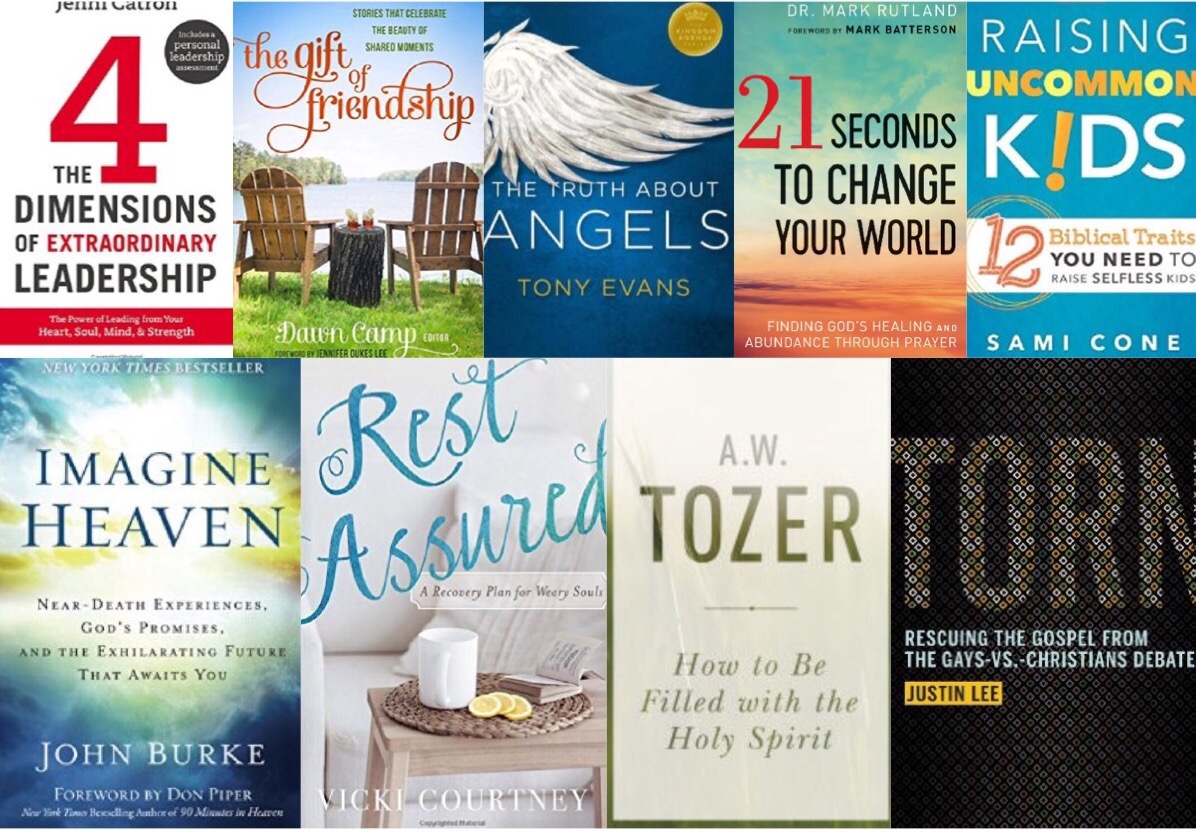
 

What I’ve Been Reading


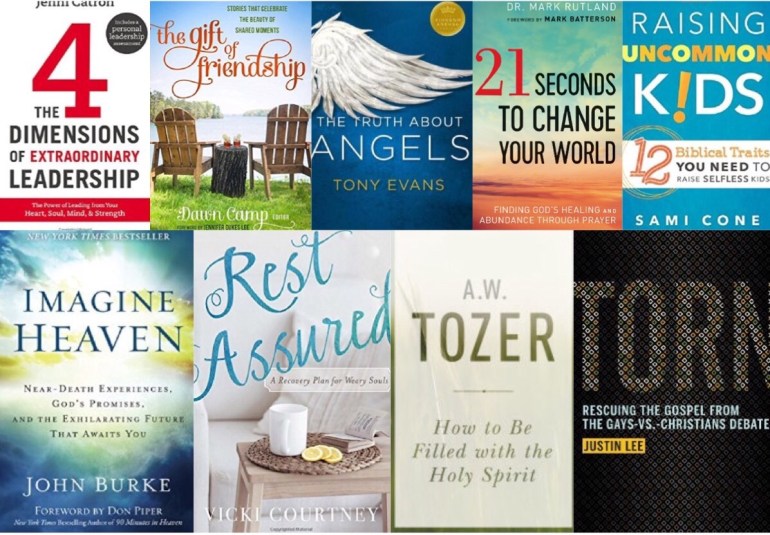
I’m a bit obsessed with books, as I’m sure you know.  My goal for this year is to read at least 40 books and so far I’ve already read 13!  Here’s a rundown of my favorite books so far.  Perhaps you’ll find something you’re interested in.

Imagine Heaven by John Burke was SO much more than I expected!  I still find myself thinking about some of the stories from this book.  It forever changed the way I think about Heaven.  You can read my full review of the book here.

I think this book came at the perfect time for me.  Rest Assured by Vicki Courtney felt like a long talk with an old friend who wants desperately for you to be happy and healthy.  I was encouraged and loved on through her words and recommend that every woman read this book!  You can read my full review of the book here.

This was the most important book I’ve read so far this year – and possibly the most important book I’ve read in many years.  I started reading it in the morning and could not put it down until I finished it by dinner time.  Torn by Justin Lee reads like a memoir and is filled with so many important thoughts and ideas that I recommend every Christian read it.  My husband and I talked about this book for weeks after I finished it because I just couldn’t stop thinking about all the things and feeling all the feelings.  If there is anything in you that wants to understand and/or connect with your LGBTQ neighbor, family member, coworker or friend – you NEED to read this book.

If you’re looking for a  practical book filled with parenting ideas and tips, Raising Uncommon Kids by Sami Cone is a great one.  She talks through 12 biblical traits to instill in your kids and how to go about doing that on a day to day basis.  It took me a while to get through this one, but there is definitely some good, helpful stuff here.  You can read my full review of this book here.

This is a tiny little book (64 pages) that you can read in an hour, but it is so entirely worth the read!  If you’ve never read anything by AW Tozer, this book would be a great place to start.  I highlighted at least half of the words in this book – it was just so good.  Much of this book is an explanation of who the Holy Spirit is, why He’s important and how we, as believers, can either ignore Him or be filled entirely with Him.  This book was like a really great sermon that you’d want to listen to again and again.  You can read my full review of this book here.

21 Seconds to Change Your World by Dr. Mark Rutland was not at all what I expected.  It was so much more!  The best part about this book is that it will speak to you no matter where you are in your relationship with Jesus.  If you are a brand new Christian, you will get something out of this book.  I you have been following Jesus your whole life, you will get something out of this book.  It truly meets you where you are and takes you a little deeper, a little further.  You can read my full review of this book here.

The 4 Dimensions of Extraordinary Leadership by Jenni Catron is my favorite leadership book that I’ve read in a very long time.  The concept of using Mark 12:30 (“Love the Lord your God with all your heart and with all your soul and with all your mind and with all your strength.”) as a model for great leadership is really wonderful!  A great leadership book is supposed to help you with three things: to recognize where you are as a leader, to see where you need to be and to know what you need to do to get there.  This book does all three in the most clear and concise way possible.  You can read my full review of this book here.

I absolutely loved The Gift of Friendship by Dawn Camp.  It was a breath of fresh air in my heart and soul during a very busy time.  Every once in a while I need a book to just read – nothing life altering, nothing I need to put into action immediately, but just a sweet book that makes my heart feel happy.  This was that book for me so far this year.  It was like a really great movie – it made me laugh, cry, think and feel deeply and it filled me up with joy.  You need to read this book and then give a copy to your very best friend.  You can read my full review of this book here.

I read this book at the hair salon while I was waiting for my color to set.  It took a full 30 minutes to read partly because it’s super short (about 60 pages) and partly because it’s so interesting.  There is not one sentence wasted in this little book – every one is filled with new and fascinating information.  I learned so many things I didn’t know about angels, demons, satan and the spiritual realm.  So much of it was new to me that I found myself looking up the scripture references to make sure Dr Evans got it right.  The only thing that would have made this book better is if there were more of it!

That’s it for me so far this year.  I’ve started about five more books – some good, some great – and I’ll give you the 411 when I finish them.  What about you – what have you been reading so far this year?